Quick Facts
- Status: Global Top 5 Diving Destination
- Population: fewer than 100 people as of 2024
- Key Site: HMS Endymion (1790 Shipwreck with 30 cannons)
- Topography: Dramatic 7,000ft continental shelf drop-off
- Transport: Golf carts and bicycles are the primary modes of travel
- Dining Rule: Dinner orders must be placed with local restaurants by 10 AM
- Whale Season: Peak migration occurs from January through April
Salt Cay is the Caribbean’s best-kept secret, where world-class adventure meets total isolation. This 'Land of Salt and Silence' offers Salt Cay diving experiences that rival the globe's top sites. From the 7,000-foot drop of the Turks Island Passage to the wild donkeys roaming Balfour Town, Salt Cay is an off-the-grid paradise for those seeking Humpback whale migration encounters and pristine coral wall dives.
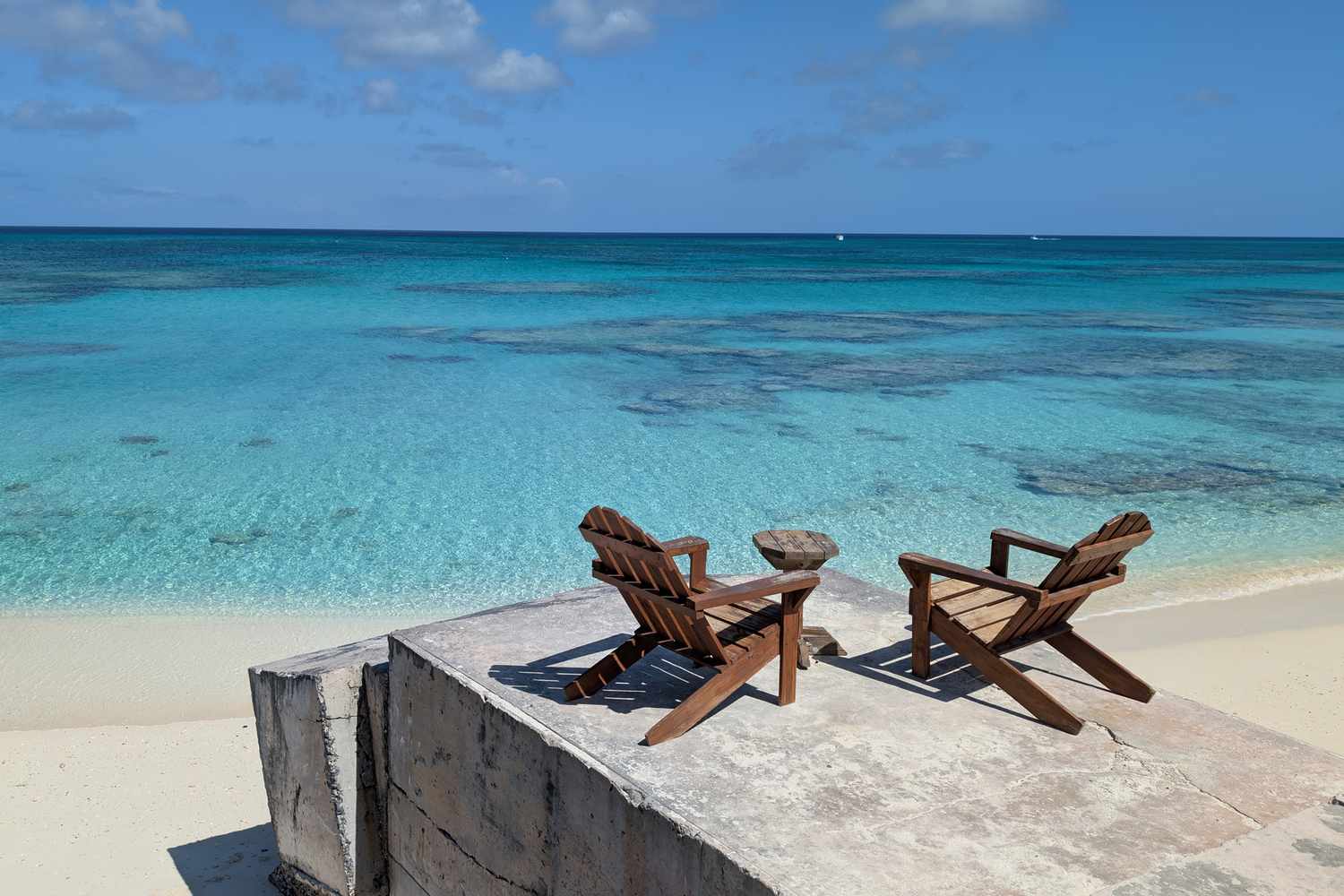
Salt Cay diving is characterized by dramatic wall drops into the 7,000-foot-deep Turks Island Passage and clear visibility often exceeding 100 feet. A signature site is the 1790 shipwreck, where divers can explore a 15-foot anchor and 30 cannons at a depth of 45 feet. The surrounding marine environment is rich with nurse sharks, reef fish, and pristine coral formations.
Logistics: Getting to the Land of Salt and Silence
I have spent a decade chasing horizons, but nothing quite prepares you for the descent into Salt Cay. As the small DHC-6 Twin Otter banked over the turquoise flats, I could see almost the entirety of the island—a mere 2.6 square miles of scrub, salt pans, and history. To get here, you have to want it. Most travelers take a flight from Providenciales to Grand Turk, followed by a local hopper flight or a 35-minute boat ride that can get quite sporty depending on the swells in the Columbus Passage.
Once you step off at the airstrip or arrive at Deane’s Dock in Balfour Town, the pace of life drops to a crawl. There are no rental car agencies here. Instead, I grabbed the keys to a sun-faded golf cart, which is the standard mode of transportation for navigating the island's dirt roads. If you are planning a Salt Cay travel tips checklist, height and weight limits for the small planes are a real factor—pack light, but pack everything you need, as the island's infrastructure is delightfully minimal.
Accommodation options are limited to a handful of charming guest houses and villas. Because of the small resident population and the finite number of beds, booking your diving services and stay well in advance is not just a suggestion; it is a necessity. Upon arrival, I quickly learned the local rhythm: the 10 AM dinner rule.
Pro-Tip: Because supplies are brought in by boat and kitchens are small, you must place your dinner order by 10 AM at whichever of the few local spots you plan to eat at that night. If you forget, you might be dining on crackers and cliff bars back at your villa.
Deep Blue Adventures: Wrecks and Walls
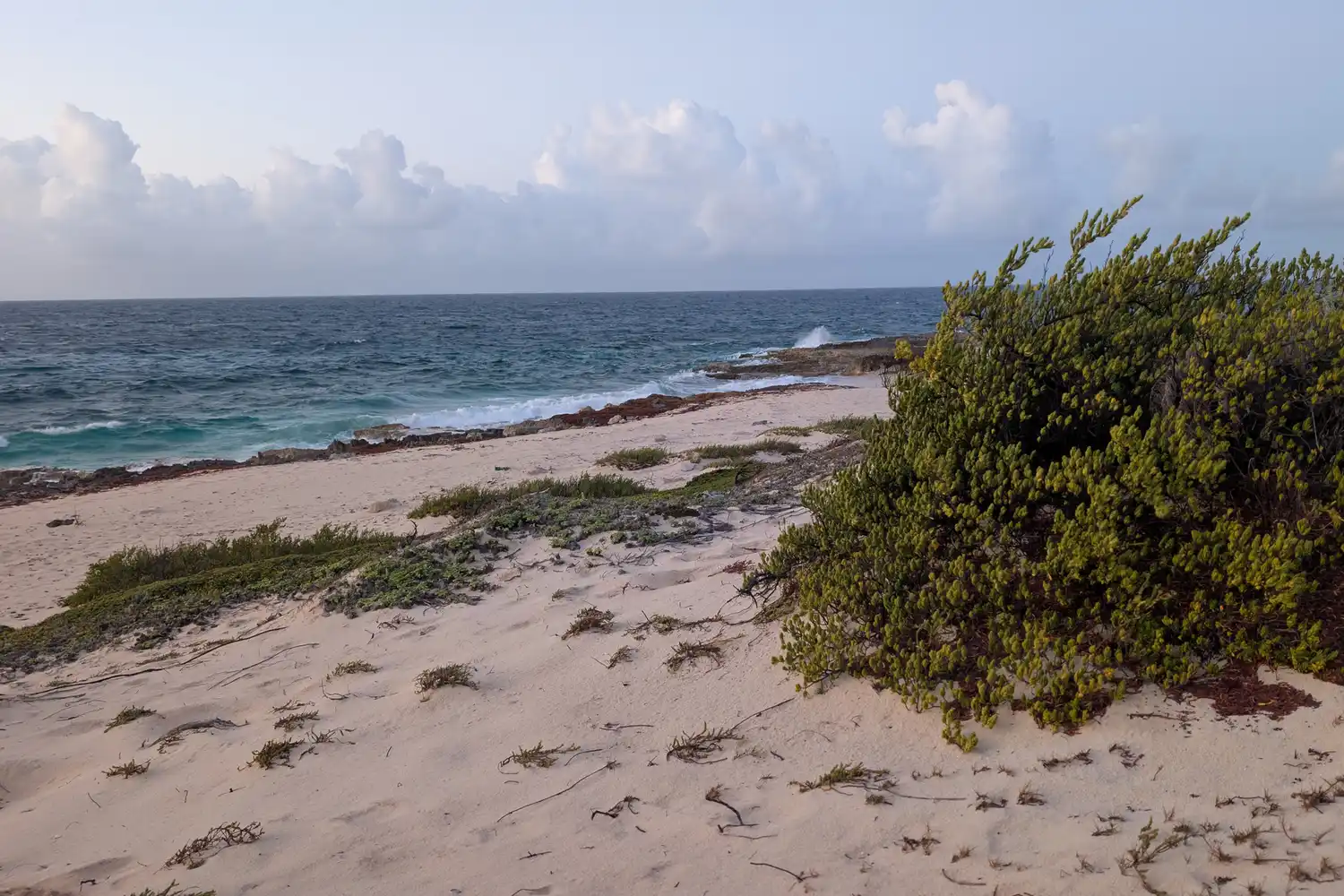
The real magic of Salt Cay happens where the shallow turquoise shelf gives way to the deep indigo of the open ocean. Diving here is defined by the continental shelf drop-off. Imagine swimming over a vibrant reef at 40 feet and suddenly seeing the floor vanish into a 7,000-foot Abyss. This is the Turks Island Passage, a massive underwater trench that acts as a highway for pelagic life.
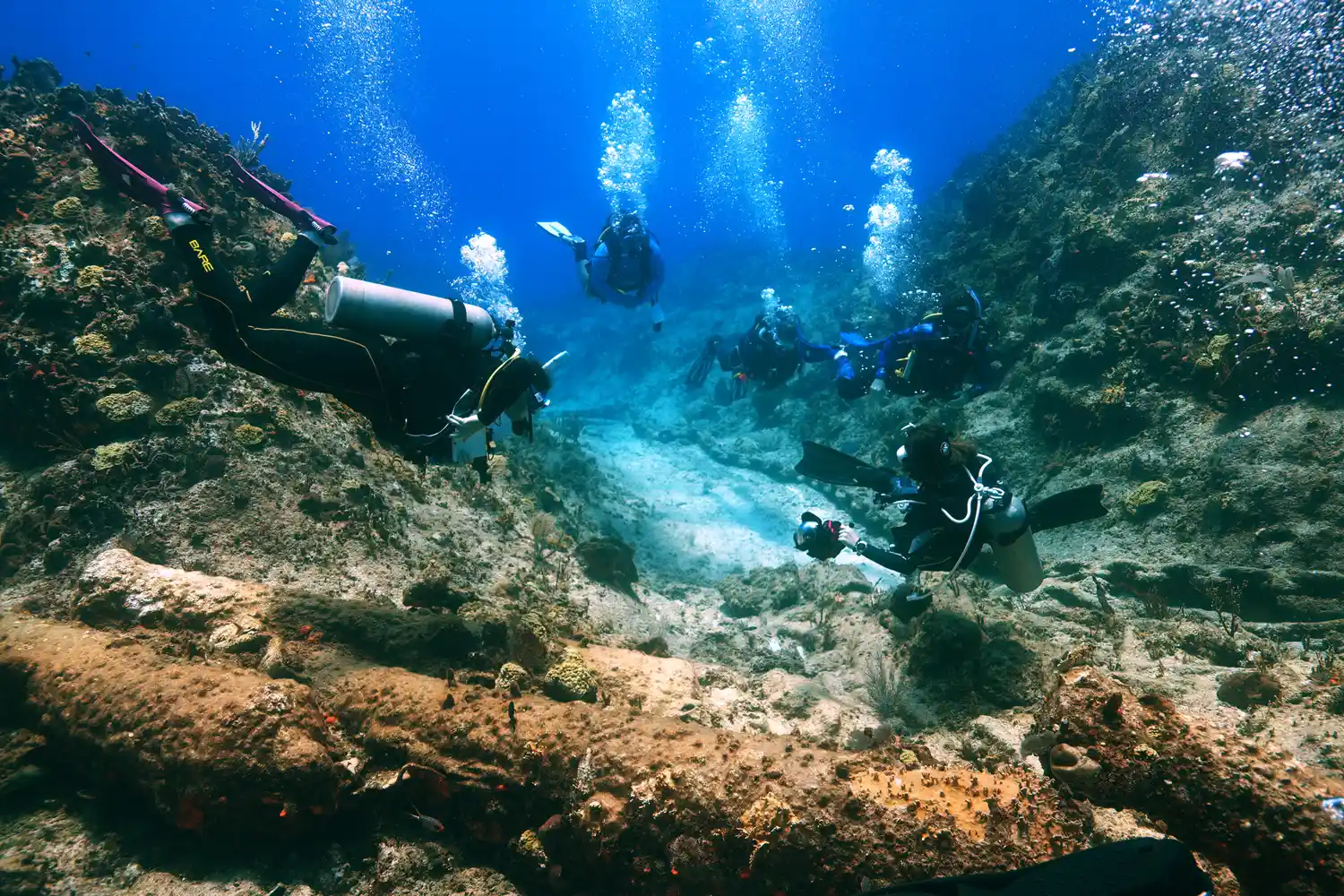
One of my first dives was the HMS Endymion, a 1790 shipwreck that serves as a hauntingly beautiful monument to the age of sail. Lying in only 45 feet of water, it is accessible for most skill levels but offers enough complexity to fascinate veterans. I spent twenty minutes just tracing the lines of the 15-foot anchor and counting the 30 cannons scattered across the seabed. The site is a haven for marine biodiversity; I spotted nurse sharks tucked under coral ledges and massive schools of yellowtail snapper circling the ballast stones.
The local operation, Salt Cay Divers, has been running these waters since 1996. Their PADI certified instructors know every nook and cranny of the 16+ dive sites, most of which are a mere 10-minute boat ride from the shore. The underwater visibility is frequently staggering, often stretching beyond 100 feet, making the coral wall dives feel like you are flying through a blue dream. You can hover alongside massive barrel sponges and watch reef sharks patrol the edge of the blue water.
Seasonal Magic: Humpback Whale Encounters
If you time your visit between January and April, Salt Cay transforms into one of the premier locations on the planet for Humpback whale migration encounters. These gentle giants use the Turks Island Passage as a primary transit lane during their annual journey. While I was there in February, the sound of whale song was a constant companion—I could even hear the faint, haunting clicks and groans while I was at 60 feet during a reef dive.
There is a strict "soft-in-water" encounter policy here, which I deeply respect. Instead of scuba diving with the whales, which can be disruptive, the best way to experience them is through guided Salt Cay snorkeling excursions. During a three-month survey in 2017, researchers identified 154 individual humpback whales migrating through these waters.
On one particular morning, we saw a mother and calf breaching just off the coast from Little Bluff Lookout. We slipped into the water about 50 yards away and waited. The curiosity of the calf brought it within twenty feet of us, a massive, graceful shadow moving through the crystalline water. It is a humbling experience that makes every logistical hurdle to reach Salt Cay feel worth it. For those who prefer to stay dry, surface-level whale watching from the island’s northern ridges offers spectacular views of the action in the passage.
Beyond the Dive: Donkeys and History
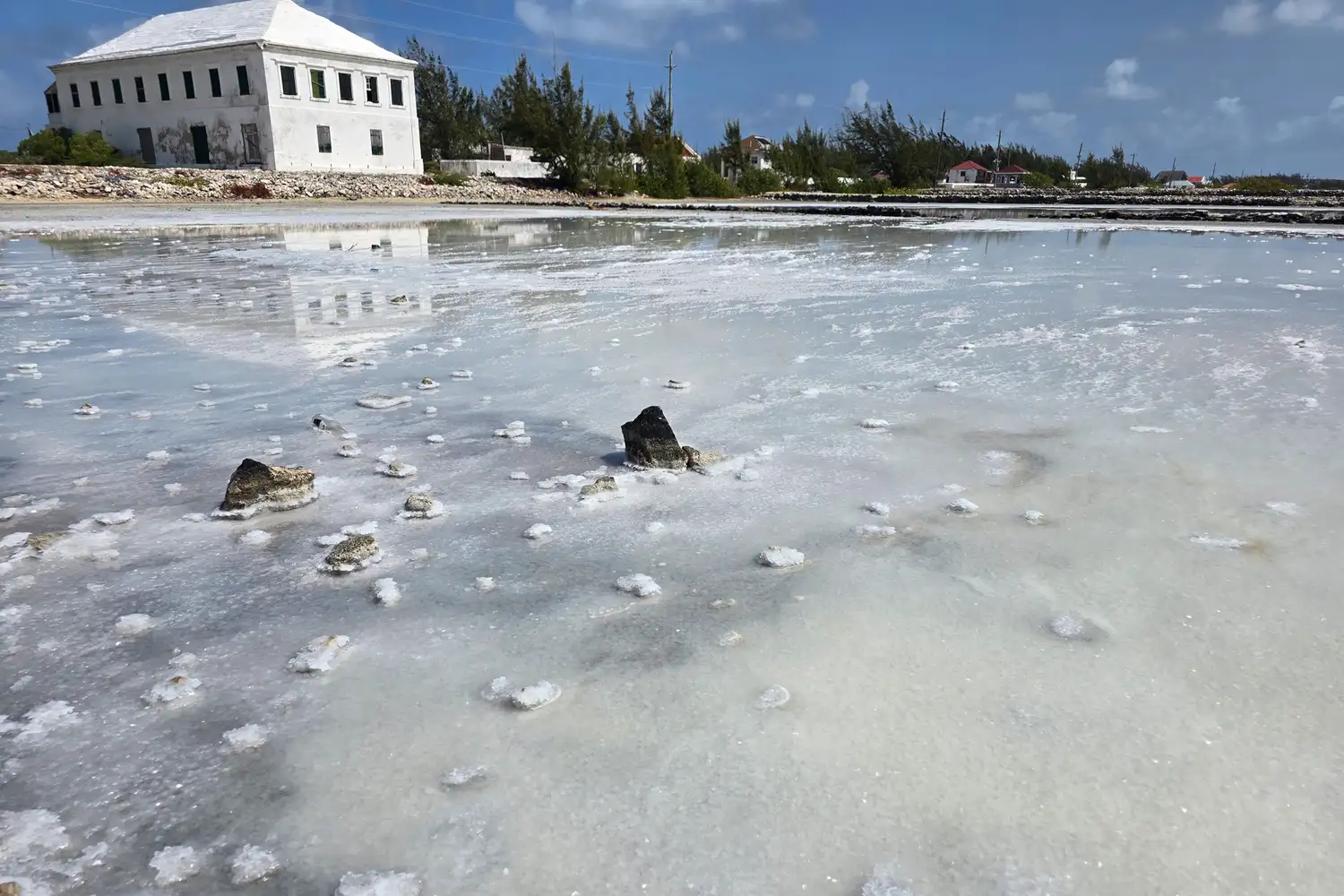
When I wasn't in a wetsuit, I was exploring the island's salt-crusted interior. Salt Cay is a living museum of the Bermudian salt industry, which served as the engine of the Turks and Caicos economy for centuries. The Salinas—vast, shallow pans divided by low stone walls—still dominate the landscape. They tell a story of a time when salt was "white gold," and the island's population was much larger than it is today.
Today, the Salinas are the playground of the island's most famous residents: the wild donkey population. These animals are the descendants of those used in Salt Cay's historical salt industry. They roam freely, often outnumbering the human residents. I quickly learned that on the dirt roads of Balfour Town, donkeys have the right of way. Watching them move through the ruins of old stone warehouses at sunset provides a sense of quietude you won't find on more commercial islands.
If you have a day off from the boat, there are some incredible best shore snorkeling spots on Salt Cay. North Bay is a standout. I took my golf cart to the northern tip of the island and walked into the water to find pristine coral heads just yards from the beach. The lack of crowds means the marine life is remarkably unafraid. I spent an entire afternoon floating over brain corals and chasing parrotfish, with not another soul in sight.
FAQ
What is the best time of year for diving in Salt Cay?
The best time for Salt Cay diving is between January and April if you want to combine your dives with whale watching. However, for the calmest seas and warmest water temperatures, the months of May through October are ideal, though they fall within the hurricane season.
Can you see humpback whales while diving in Salt Cay?
While it is possible to see or hear them during a scuba dive, most intentional encounters are done as surface-level snorkeling trips. This is more sustainable for the whales and allows for better visibility as they often stay near the surface while migrating through the Turks Island Passage.
How do you get to Salt Cay for a scuba diving trip?
You typically fly into Providenciales International Airport (PLS) and take a domestic flight to Grand Turk. From Grand Turk, you can take another short flight or a boat ferry to Salt Cay. It is essential to coordinate your arrival with your lodging and dive operator.
What are the most popular dive sites on Salt Cay?
The HMS Endymion shipwreck is the most famous site, featuring 30 cannons and a massive 1790-era anchor. Other popular sites include the dramatic wall dives along the continental shelf drop-off, where depths plunge from 40 feet to several thousand.
What marine life can be seen when diving in Salt Cay?
Beyond migrating humpback whales, divers commonly encounter nurse sharks, Caribbean reef sharks, eagle rays, and hawksbill turtles. The reefs are also home to a dense population of tropical fish like queen angelfish, groupers, and vibrant parrotfish.
Everything about Salt Cay is a reminder that the best adventures often require a little extra effort. Whether you are hanging over a 7,000-foot wall or sharing a dirt road with a descendant of the salt trade, this island stays with you long after the salt has washed off your gear. Just remember to book your cart and your dinner early—this is a land of silence, and it moves at its own beautiful pace.