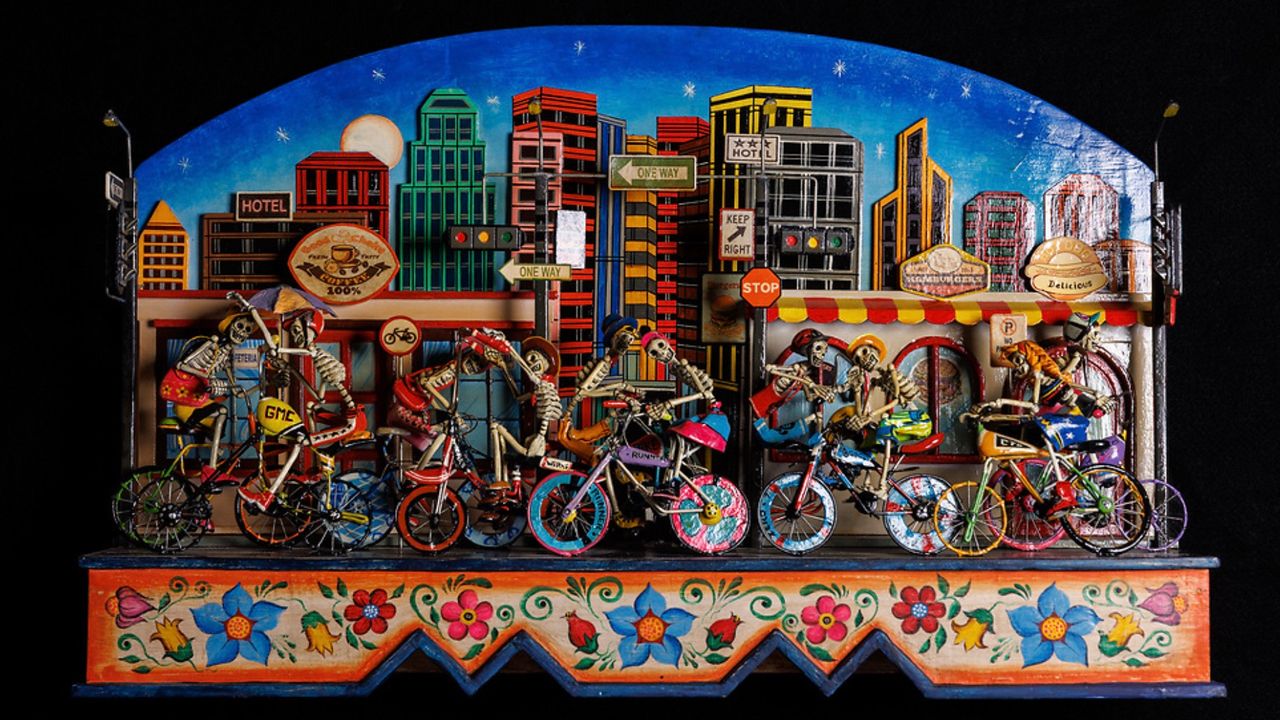
Quick Facts
- Origin: Ayacucho region, derived from 16th-century Spanish Santero boxes.
- Core Materials: A specialized potato starch binder mixed with gypsum and cactus gum.
- Key Artistry: Figures are hand-molded, painted with aniline dyes, and housed in colorful wooden boxes.
- Historical Shift: Transformed from religious altars to secular folk art in 1942 by Joaquin Lopez Antay.
- Cultural Significance: Recognized as a National Cultural Heritage in Peru, blending Quechua iconography with modern social themes.
- Modern Evolution: Currently used as a medium for social commentary on issues like the 1980–2000 internal conflict and global pandemics.
Peruvian retablos are more than just decorative boxes; they are portable chronicles of Andean life. Originating in Ayacucho, these intricate shadow boxes have evolved through centuries of cultural mestizaje. Once used by Spanish priests for conversion, they are now powerful mediums for social commentary. Exploring the history of Andean retablos reveals a journey from sacred rituals to modern political statements.
From Sacred Altars to Rural Chronicles: The Historical Evolution
To walk the cobblestone streets of Ayacucho is to feel the weight of centuries of history held in every doorway. It was here, in this high-altitude city of churches, that the story of Peruvian retablos began. The word itself comes from the Latin roots "retro tabula," meaning "behind the altar," referring to the vast, gilded backdrops seen in Spanish cathedrals. During the 16th century, Spanish colonialists brought smaller, portable versions known as Santero boxes. These were essentially traveling altars used by priests to facilitate religious conversion among indigenous populations in the remote Andes.
However, the Andean spirit is one of profound resilience and adaptation. Through a process of mestizaje—the blending of Spanish and indigenous cultures—the Santero boxes began to change. Quechua artisans started to weave their own worldviews into the Catholic structures. In a fascinating display of cultural survival, indigenous deities were often hidden in plain sight; for instance, the lightning god Illapa was frequently whispered into the iconography of Saint Mark, a patron of livestock. These early boxes were primarily used for the "Herranza de Ganado," a ritual for marking cattle, where the box acted as a spiritual protector of the herd.
The true pivot toward the modern retablo happened in the 20th century. By the 1930s, the expansion of road infrastructure in Peru began to connect the isolated Andean highlands with the urban markets of Lima. This physical connection created a cultural bridge. In 1942, master artisan Joaquín López Antay, encouraged by indigenist artists in Lima, made a radical decision. He began to strip away the purely ritualistic function of the box, transforming the Cajón San Marcos into the secular retablo ayacuchano. No longer confined to religious protection, the boxes became vibrant dioramas of daily Andean life, depicting everything from bustling marketplaces to the chaotic joy of village festivals.
The Alchemy of Art: Traditional Materials and Craftsmanship
When you hold an authentic retablo, there is a tangible sense of the earth from which it came. The figures inside are not factory-molded plastic; they are the result of a delicate chemical alchemy passed down through generations. Master artisans begin with the "masa," a specialized paste. This dough is a labor-intensive mixture of boiled potato starch binder, finely ground gypsum powder, and a sticky secretion known as cactus gum.
The potato starch binder provides the flexibility required for intricate details, while the cactus gum acts as a natural adhesive and hardener. Working with this medium requires immense patience. Each tiny figure—whether it be a musician with a charango or a grandmother in a pleated polleras skirt—is molded by hand. Once the figures have dried to a stone-like hardness, the artisan applies vibrant aniline dyes with brushes so fine they appear to consist of only a few hairs.
| Material | Component Function | Source/Origin |
|---|---|---|
| Potato Starch | Binding agent and structural flexibility | Local Andean potato varieties |
| Gypsum Powder | Providing "body" and white base for color | Mineral deposits in the Ayacucho valley |
| Cactus Gum | Natural glue and surface hardening | Extracted from the prickly pear cactus |
| Aniline Dyes | Saturated, long-lasting color | Mineral and botanical powders |
| Huamanga Stone | Fine carving for alabaster figurines | Local white volcanic stone |
Traditional folk art preservation relies on these specific, natural ingredients. While some modern workshops have shifted toward synthetic clays and plywood to meet high tourist demand, the most respected families in Ayacucho still adhere to the old ways. It can take months to complete a single, large-scale piece, where every miniature fruit in a market scene or every tiny reed on a festive arch is crafted with individual attention. This artisan craftsmanship is what separates a true piece of art from a mere souvenir.
Art as a Mirror: Documentation of Conflict and Modern Society
The most profound evolution of Peruvian retablos occurred when the boxes stopped being just beautiful and started being brave. During the dark years of Peru's internal conflict from 1980 to 2000, Ayacucho was at the epicenter of a period that resulted in approximately 69,280 deaths or disappearances. During this time, the retablo transitioned into a vital medium for historical testimony.
Artisans began to document the violence, portraying scenes of mourning, military interventions, and community resilience within the wooden frames. These political retablos served as a silent but colorful protest, ensuring that the suffering of the Andean people would not be forgotten by the capital or the world. These pieces are often structured like a "two-story house." The upper level traditionally represents the celestial or sacred realm, while the bottom level depicts the reality of earthly life—a duality that allows for complex social commentary.
Today, modern Peruvian retablo artists continue this legacy of using the medium as a mirror for society. The Jimenez family, for example, is renowned for pushing the boundaries of the craft. They have used their boxes to address contemporary global events, including the impacts of the COVID-19 pandemic on rural communities and the #MeToo movement. In 1975, the cultural status of these artists was forever changed when Joaquín López Antay became the first folk artist to be granted Peru's National Culture Award. This was a landmark moment, signaling that these boxes were not just "crafts" but intellectual and political art forms of the highest order.
"A retablo is not just a box of figures; it is a memory box. We put our history, our pain, and our celebrations inside so they can travel anywhere in the world and tell our story." — Attributed to an Ayacucho Master Artisan.
Visiting the Source: A Traveler’s Guide to Ayacucho Workshops
For those who wish to experience this magic firsthand, a journey to the "City of 33 Churches" is essential. Ayacucho remains the beating heart of this tradition, and visiting the local Ayacucho retablo workshops offers a sensory experience unlike any other.
- Casa Museo Joaquin Lopez Antay: Located in the center of Ayacucho, this museum is a pilgrimage site for anyone interested in the history of Andean retablos. You can see early examples of Santero boxes and trace the transition to the secular style.
- Barrio de Santa Ana: This traditional artisan neighborhood is home to many family studios. Walking through the workshops, you can smell the boiled potato and earth. Many families offer sessions for attending retablo making workshops in Peru, where you can try your hand at mixing the masa.
- Museo de Artes y Tradiciones Populares (Lima): If you cannot make it to the highlands, this museum in Lima’s colonial center houses one of the most significant collections of folk art preservation in the country.
- Barranco District Galleries: For high-end, contemporary pieces, the galleries in the bohemian Barranco district of Lima bridge the gap between traditional techniques and modern Peruvian retablo artists and their styles.
When considering how to visit Ayacucho retablo workshops, it is best to hire a local guide who can facilitate introductions to the master families. Many of these studios are also the homes of the artists, and a polite request often leads to a deep dive into the main symbols and meanings in Andean retablos, such as why a particular flower is used or the significance of the colors on the exterior doors.
FAQ
What is a Peruvian retablo?
It is a traditional folk art shadow box, typically made of wood, containing miniature figurines that depict religious, historical, or everyday Andean scenes. They originated as portable altars but have evolved into complex narrative art.
How are Peruvian retablos made?
They are made by hand-molding tiny figures from a paste of potato starch binder and gypsum powder. These figures are then painted with aniline dyes and placed into a wooden box, which is decorated with colorful floral motifs.
What do the scenes in Peruvian retablos represent?
Historically, they represented sacred Catholic or ritualistic scenes. Today, they represent a wide range of themes including mountain festivals, agricultural chores, political history, and modern social justice movements.
Are Peruvian retablos always religious?
No. While they began as religious Santero boxes for Catholic conversion, the 1940s marked a shift toward secular themes. While religious versions still exist, most modern retablos focus on cultural and social life.
Who are the most famous retablo artists in Peru?
Joaquín López Antay is the most famous historical master. Today, members of the Jimenez and Antay families are highly regarded for their innovation and for maintaining the labor-intensive traditional techniques.
As you stand before a retablo, look closely at the tiny faces. You might see the joy of a weaver at her loom, the solemnity of a religious procession, or the grit of a political protest. These boxes are small, but they contain the entire soul of a nation, captured in the simple alchemy of potato paste and paint. Supporting these artisans is not just about owning a piece of decor; it is about participating in the continuation of a cultural story that has refused to be silenced for five hundred years.