Quick Facts
- Safety Margin: Maintain 6 to 10 feet from any snake at all times.
- Hotspot: Big Bend National Park hosts nearly 50% of US snake species.
- Fatalities: Statistically rare, with only one snakebite death recorded out of 1,025 NPS fatalities between 2007 and 2013.
- First Aid: Call 1-800-222-1222 immediately; avoid suction, ice, and tourniquets.
- Equipment: Prioritize a satellite communicator over standard suction-based snake bite kits.
- Hot Zone: Everglades National Park is home to 29 species of snakes, four of which are venomous.
Stay safe on the trails with these critical national park snake safety tips. While U.S. national parks are home to diverse species, understanding how to avoid snake bites while hiking is essential for a worry-free adventure. Use this guide to identify venomous snakes in US national parks and master first aid protocols. Big Bend National Park is home to nearly half of all snake species found in the United States, making it one of the most snake-dense regions for hikers. To stay safe, hikers should maintain a distance of at least six feet from any snake to remain outside its striking range and use binoculars for observation rather than approaching.
Snake Hotspots: Where the Risks Are Highest
I’ve logged thousands of miles across the American wilderness, from the jagged peaks of the Cascades to the limestone canyons of the Chisos Mountains. If there is one thing I have learned, it is that reptiles are as much a part of the landscape as the trails themselves. When you are planning your next expedition, it is vital to know which ecosystems demand the highest level of vigilance. While 82% of snakebites in the US occur in the South, the diversity of species varies wildly by park profile.
Big Bend National Park is the undisputed heavyweight when it comes to reptile variety. It hosts nearly 50% of the snake species found in the entire country. When I trek through the desert habitats of West Texas, I am always scanning the scrub for Western Diamondbacks and the elusive Trans-Pecos copperhead. If your adventure takes you to the opposite corner of the country, Everglades National Park is home to 29 species of snakes, four of which are venomous: the eastern diamondback rattlesnake, Florida cottonmouth, eastern coral snake, and dusky pygmy rattlesnake.
Other high-activity zones include Saguaro National Park and the Grand Canyon. In these arid environments, rattlesnakes find shelter under rocky ledges and in the shade of cacti. Understanding snake safety tips for Big Bend national park can often apply to these other desert parks as well: movement is most common during the cooler morning and evening hours.
Preparation & Gear: Beyond the Basic Kit
Before I set foot on a trail in snake country, I perform a gear audit. Most people think about the weight of their pack or the tread on their soles, but few consider how their clothing acts as the first line of defense. When I’m navigating thick brush where venomous snakes in US national parks might be lounging, I opt for thick leather boots that cover the ankle and loose-fitting long pants. The loose fabric can often absorb or deflect a strike before the fangs hit skin.
Forget those old-fashioned suction kits you see in gift shops. Medical research has moved far beyond them, and they are now considered more dangerous than helpful. Instead, I focus on communication. In the backcountry, cell service is a luxury you cannot rely on. I always carry a satellite communicator to ensure I can signal for help if an envenomation occurs.
When building essential items for a hiking snakebite first aid kit, prioritize these items:
- A satellite communicator or personal locator beacon.
- Clean gauze and pressure bandages for light dressing.
- A permanent marker to track the spread of swelling on the skin.
- A splint to immobilize the affected limb.
- Contact information for the nearest ranger station.
How to Identify Venomous Snakes on the Trail
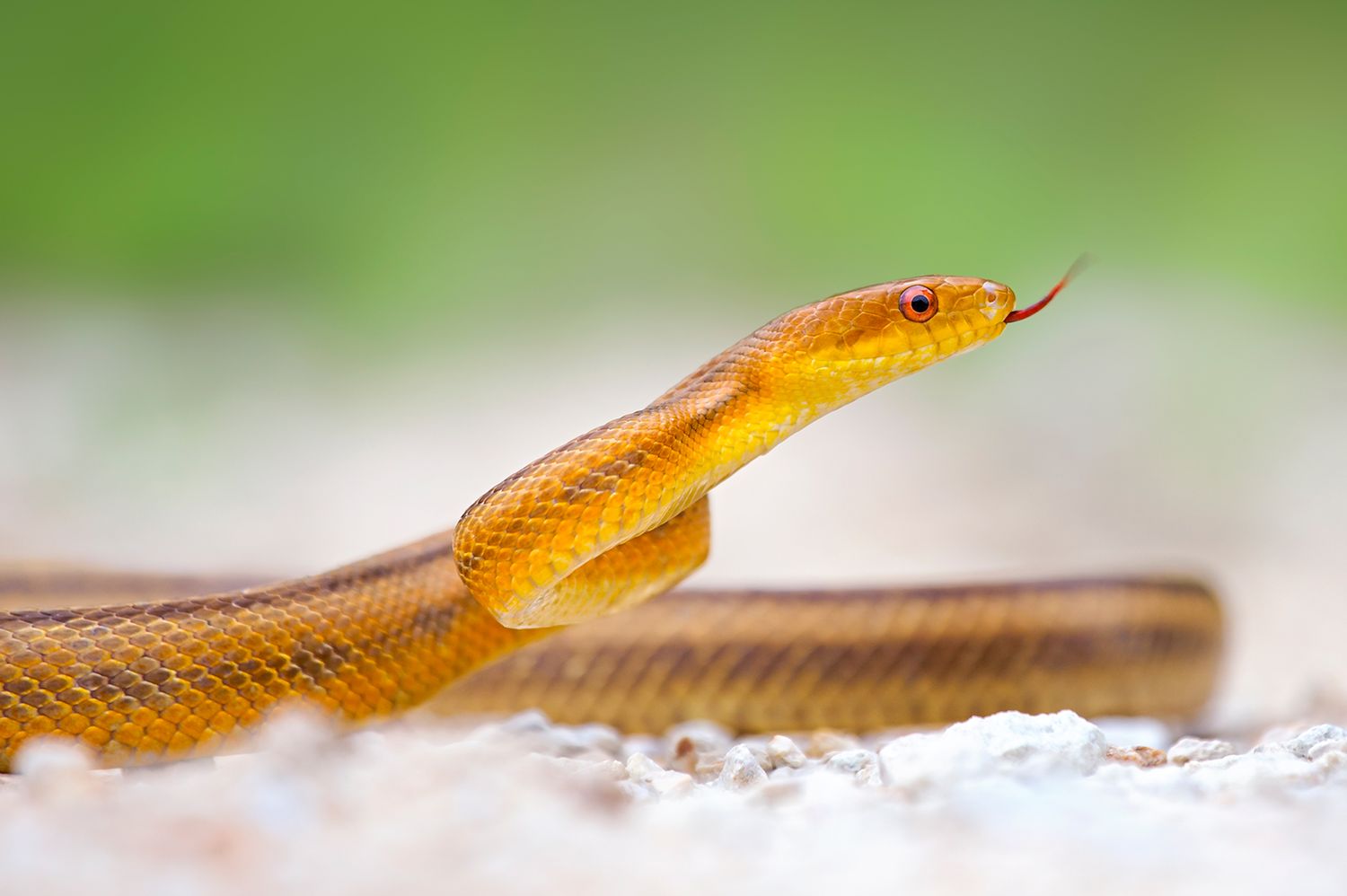
Identifying snakes in the wild requires a mix of taxonomic knowledge and observational calm. Throughout most US national parks, you will primarily encounter pit vipers—a family that includes rattlesnakes, copperheads, and cottonmouths. Look for the heat-sensing pits located between the eye and the nostril, though you should never be close enough to see these without binoculars. Most pit vipers also possess a distinct triangular-shaped head and vertical, cat-like pupils.
A common challenge for hikers in the Eastern US is identifying copperheads vs non venomous snakes like the northern water snake. I always look for the classic hourglass pattern on the copperhead’s back; the bands are narrow at the top and wide at the sides. Non-venomous look-alikes usually have more irregular or rounded blotches. In the Southeast, remember the mnemonic for coral snakes: "Red on yellow, kill a fellow; Red on black, friend of Jack." If the red and yellow bands touch, keep a wide berth.
If you happen to spot a reptile while trekking, knowing what to do if you encounter a snake on a trail is simple: freeze. Give the animal a moment to realize you are there. Most snakes will move away if given a clear exit path. Never attempt to poke, move, or harass the snake. Simply back away slowly until you are at least ten feet away, then wait for it to pass or find a wide way around.
Emergency Response: Evidence-Based First Aid
If the worst happens and a bite occurs, your mental state is your most important tool. I’ve seen hikers panic, which only sends the heart rate soaring and pumps venom through the system faster. The window for effective antivenom treatment is typically 4 to 6 hours, so your priority is a swift, calm evacuation.
Correct snakebite first aid for hikers involves a policy of "do no harm." The financial reality of a bite is also a sober reminder of why safety matters; a single vial of antivenom like CroFab can cost over $16,000, and a full treatment often requires several vials. Your goal is to reach a medical facility that stocks this antivenom as quickly as possible without over-exerting yourself.
Poison Control Hotline: If you or a companion are bitten, immediate expert advice is available 24/7. Call: 1-800-222-1222
If you are in a remote area, you must know how to signal for help after a snakebite in remote areas using your satellite device. Move toward the nearest trailhead or ranger station at a steady, controlled pace—avoid running. If you are with a partner, have them carry your gear to reduce your physical strain.
Myth-Busting: Folklore That Can Kill
There is a lot of "cowboy medicine" out there that needs to stay in the history books. Folklore often suggests cutting the wound or using a tourniquet, but these methods are disastrous. Tourniquets trap the venom in a small area, leading to severe localized tissue damage and potential limb loss, while cutting only introduces the risk of infection.
| Action | Myth | Reality |
|---|---|---|
| Suction Devices | Removes venom effectively. | Removes less than 0.04% of venom and damages skin. |
| Ice Application | Slows venom spread. | Can cause frostbite and worsen tissue necrosis. |
| Tourniquets | Stops venom from reaching the heart. | Causes permanent nerve and tissue damage. |
| Electric Shock | Neutralizes snake venom. | Has zero medical benefit and causes burns. |
Another common misconception is that all bites are equal. In reality, roughly 25% to 50% of pit viper bites are dry bites, where no venom is injected. However, because you cannot know this in the field, you must treat every strike as a medical emergency. Whether it is a rattlesnake in Arizona or a copperhead in Virginia, the response remains the same: immobilize, stay calm, and seek professional help.
FAQ
What should you do if you encounter a snake on a hiking trail?
If you see a snake on the trail, stop moving immediately and maintain a distance of at least ten feet. Avoid making sudden movements that might startle the snake. Slowly back away and allow the snake to move off the trail on its own. If the trail is narrow and the snake does not move, look for a safe, wide path to go around it while keeping your eyes on its location.
How can I protect myself from venomous snakes in national parks?
The best protection is a combination of awareness and gear. Stick to marked trails and avoid walking through tall grass or dense underbrush where you cannot see your feet. Wear sturdy, over-the-ankle leather boots and long, loose pants. Always look where you are placing your hands and feet, especially when scrambling over rocks or logs in desert habitats or swampy areas.
What should you do if a snake bites you while hiking?
The most important step is to remain calm and move away from the snake to avoid a second strike. Do not attempt to catch or kill the snake. Remove any restrictive clothing or jewelry near the bite site in case of swelling. Keep the bitten area at or slightly below heart level and proceed to the nearest medical facility or ranger station immediately. Use a satellite communicator to signal for help if you are in a remote backcountry area.
Should I carry a snake bite kit in my backpack?
You should not carry traditional commercial kits that include scalpels or suction pumps, as these are ineffective and can cause additional injury. Instead, your first aid kit should include items like a pressure bandage, a splint, and most importantly, a reliable communication device like a satellite messenger to contact emergency services and a ranger station.
Which national parks have the highest risk of snake encounters?
Parks located in the southern and western regions of the US typically have the highest reptile diversity. Big Bend National Park and Saguaro National Park are major hotspots for rattlesnakes and copperheads. Everglades National Park also has a high density of venomous species, including cottonmouths and coral snakes. While these parks have more snakes, remember that actual snakebite incidents are extremely rare across the entire National Park System.