Quick Facts
- Highlight Event: Mars-Uranus Conjunction on July 4
- Photographic Peak: New Moon Milky Way viewing window around July 14
- Brightest Lineup: Mars, Moon, and Pleiades triangle on July 11
- Shooting Stars: Southern Delta Aquariids peak reaching its maximum on July 30
- Full Moon: Buck Moon/Thunder Moon peak illumination on July 29
- Earth's Position: Aphelion orbital point reached on July 6
- Planetary Shift: Saturn starts its retrograde motion through the stars
July 2026 features several notable astronomical events, starting with a rare Mars and Uranus conjunction on July 4. This busy 2026 astronomical events calendar also includes a visually stunning morning where the waning crescent moon forms a triangle with Mars and the Pleiades star cluster on July 11. Whether you are looking for deep-sky photography or simple naked-eye visibility of the planets, these astronomical events in july 2026 offer some of the best astronomical events 2026 has to offer for night sky enthusiasts worldwide.
July 4-6: Early Month Deep Sky & Planetary Shifts
The month kicks off with a technical challenge that is well worth the effort for those with a steady hand and a good pair of optics. In the pre-dawn hours of July 4, we witness a rare Mars Uranus conjunction July 2026. This rare celestial conjunction brings the Red Planet and the distant ice giant incredibly close together in the sky.
? The Conjunction Details: Look low in the northeast sky just before sunrise. Mars will be the easy find, glowing with an apparent magnitude of 1.3. Uranus, much fainter at magnitude 5.8, sits right at the edge of naked-eye visibility under perfect conditions. However, the real treat is the proximity: the two planets will be separated by a mere 7 arcminutes. This means you can spot both in the same high-power telescope field of view. Mars will appear as a small, distinct orange disc, while Uranus will show up as a tiny, pale blue-green dot.
On July 6, Earth reaches a significant point in its orbit known as Aphelion. This is the moment when our planet is at its furthest distance from the Sun for the entire year, approximately 94.5 million miles away. While it might seem counterintuitive during the heat of the northern summer, our distance from the Sun actually varies by about 3 million miles throughout the year. The summer heat is driven by the tilt of Earth's axis, not our orbital distance.
Editor's Tip: Use Mars as your "anchor" to find Uranus. Since they are so close on July 4, any binoculars pointed at Mars will naturally reveal the glimmer of Uranus nearby.
July 11-12: The Mars, Moon, and Pleiades Triangle
If you only wake up early for one event this month, make it the morning of July 11. As the dawn begins to break in the eastern sky, a beautiful arrangement of celestial bodies creates one of the best astronomical events 2026 for casual observers.
?️ The Celestial Lineup: A waning crescent moon will join forces with the bright orange glow of Mars and the crystalline blue-white stars of the Pleiades star cluster. These three objects will form a tight celestial triangle, appearing within just over five degrees of each other in the constellation Taurus.
The color contrast here is breathtaking. Mars provides a steady, warm hue that stands out against the "Seven Sisters," which shimmer like ice diamonds. Just below this triangle, keep an eye out for Aldebaran, the fiery eye of the Bull, which adds another splash of red to the scene. Meanwhile, Saturn continues its journey in the background, having recently begun its Saturn retrograde phase, making it a prime target for late-night viewing throughout the month.
July 14: New Moon & Milky Way Photography Guide
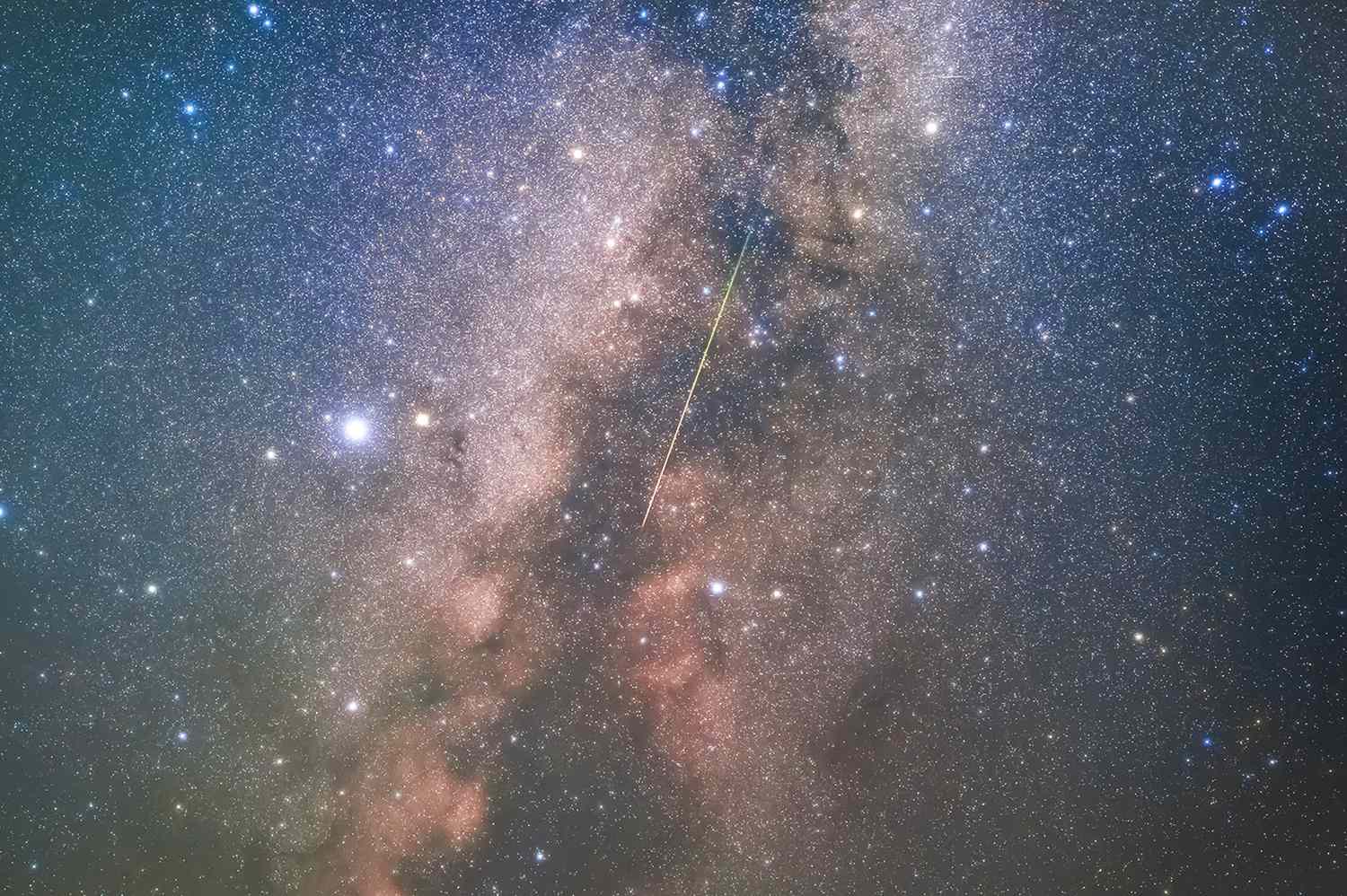
Mid-month signals the arrival of the new moon on July 14, providing the ultimate dark-sky canvas. This is the peak window for the July 2026 Milky Way viewing guide, as the lack of moonlight allows the faint, ghostly shimmer of our galaxy to take center stage.
? Finding the Galactic Core: In the hours around midnight, look toward the south. You are searching for the constellation Sagittarius, often identified by the "Teapot" asterism. The densest, most brilliant part of the Milky Way, known as the Galactic Core, appears to "steam" out of the spout of the Teapot. Under a truly dark sky, the dust lanes and star clouds of the core are visible to the naked eye, appearing as a luminous ribbon stretching across the heavens.
For the adventurous observer, July 14 also offers a record-breaking challenge. Some experienced skywatchers will attempt to spot the incredibly thin, 15.3-hour-old moon just after sunset. This requires a perfectly clear horizon and a bit of luck, as the sliver of the moon will be almost invisible against the twilight glow.
July 17-29: Venus-Moon, Pluto Opposition, and the Thunder Moon
As we move into the latter half of the month, the evening sky begins to show off. On July 17, look to the west shortly after sunset to see a brilliant pairing of Venus and the waxing crescent moon. Venus is the brightest planet in our sky, often mistaken for a plane or a drone because of its intense, steady light.
On July 27, the dwarf planet Pluto reaches opposition. While Pluto is far too dim for naked-eye visibility—requiring a substantial telescope and a detailed star chart—this date marks the point when it is "opposite" the Sun in our sky and at its brightest for the year.
Finally, the month's lunar cycle culminates in the full Moon on July 29. Commonly known as the Buck Moon or the Thunder Moon, this full moon is scheduled to reach its peak phase of illumination at 14:35 UTC on July 29, 2026. The Thunder Moon 2026 observation will be particularly striking as it rises in the east just as the sun sets, casting a long, silvery glow over the summer landscape. Nearby, you might spot the bright star Regulus as it begins to sink lower in the western sky.
July 30-31: Dual Meteor Shower Peaks
The 2026 astronomical events calendar saves some of its most exciting action for the final 48 hours. At the end of July, Earth passes through debris trails left by comets, resulting in two overlapping meteor showers. While the full moon from a few days prior may still offer some light interference, the number of meteors should still provide a great show for patient viewers.
Meteor Shower Comparison: July 2026
| Feature | Southern Delta Aquariids | Alpha Capricornids |
|---|---|---|
| Peak Date | July 30 | July 31 |
| Expected Rate | 20-25 meteors per hour | 5 meteors per hour |
| Speed | Medium-Fast | Slow-moving |
| Characteristics | Faint streaks, hard to spot | Bright fireballs, very dramatic |
| Source | Comet 96P/Machholz | Comet 169P/NEAT |
| Radiant Point | Constellation Aquarius | Constellation Capricornus |
The Southern Delta Aquariids are reaching their expected rate of up to 20 meteors per hour during the late night of July 29 into the morning of July 30. These meteors originate from Comet 96P/Machholz. While the Southern Delta Aquariids 2026 peak provides quantity, the Alpha Capricornids fireballs 2026 on July 31 provide the quality. Though the rate is lower, Alpha Capricornids are famous for producing exceptionally bright and slow fireballs that can light up the entire sky, making them visible even under moderate light pollution.
To get the best view, head out after midnight when the radiant point is high in the sky. Lie flat on your back, avoid looking at your phone to preserve your night vision, and give your eyes at least 20 minutes to adjust to the darkness.
FAQ
What are the major astrological events in 2026?
While astronomy focuses on the physical study of celestial bodies, astrology tracks the movement of planets through zodiac signs. In 2026, many enthusiasts look toward the Saturn retrograde and major planetary conjunctions as significant markers. From a scientific perspective, the major astronomical events 2026 time and date remain the primary focus for most observers tracking the moon and planetary alignments.
What is the rarest space event in 2026?
For many, the Mars-Uranus conjunction on July 4 is considered a rare highlight because of how close the two planets appear. However, the 2026 astronomical events calendar is most famous for the total solar eclipse on August 12, 2026. While that occurs just after July, the preparation for such a rare event begins long before, making 2026 a landmark year for space fans.
What big events will happen in 2026?
Beyond the monthly lunar cycles and planetary meetings, 2026 is packed with dual meteor shower peaks and several planetary oppositions. The combination of the Mars and Pleiades July 2026 alignment and the triple header of meteor showers at the end of the month makes July one of the most active windows of the year.
What is the next big astronomical event?
Following the events in July, the Perseid meteor shower in August is typically the next major highlight on the best astronomical events 2026 list. However, if you are looking at immediate events, the Southern Delta Aquariids and Alpha Capricornids fireballs at the end of July are the current "must-see" moments for anyone under a clear sky.
Why is 2026 so important astrologically?
The year 2026 is often cited in celestial discussions due to the rare configurations of outer planets and several significant eclipses. While astronomical events 2026 provide scientific data, many people find meaning in the rare recurrence of patterns like the Thunder Moon 2026 observation or the specific timing of planetary retrogrades like Saturn's.