Quick Facts
- Oldest Inhabited: Windsor Castle, United Kingdom
- Largest by Area: Malbork Castle, Poland
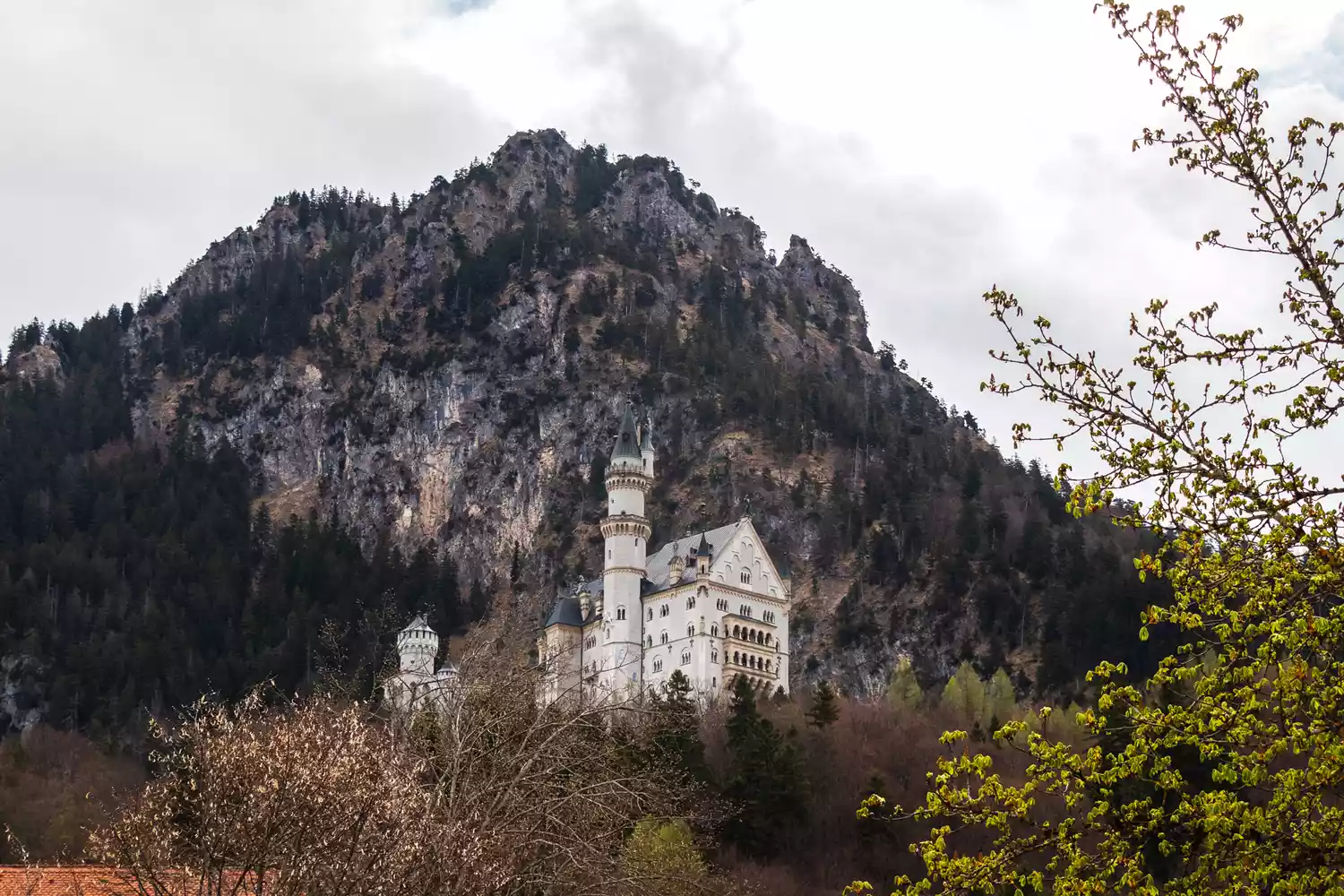
- Most Photographed: Neuschwanstein Castle, Germany
- Best Medieval Fort: Edinburgh Castle, Scotland
- Asian Icon: Himeji Castle, Japan
- World Record Complex: Prague Castle, Czech Republic
History lovers should prioritize world-renowned sites like Germany's Neuschwanstein Castle, a romantic palace built by King Ludwig II, and Scotland's Edinburgh Castle, a fort with a legacy of complex sieges. Other must-see destinations include the historic Alcázar of Segovia in Spain, known for its royal influence, and Japan’s 16th-century Matsumoto Castle, an essential example of feudal defensive architecture. These famous castles represent the pinnacle of global heritage, offering a window into the evolution of military power and domestic luxury.
The Icons of Western Europe
Walking through the gates of the most famous castles in the world feels like stepping into the pages of a weathered storybook. In Western Europe, the architecture shifts from the aggressive, thick-walled defensive architecture of the early Middle Ages to the flamboyant grace of the Renaissance. Here, the landscape is dotted with famous castles in europe that once served as the primary stage for royal drama and territorial disputes.
1. Neuschwanstein Castle, Germany
Perched atop a rugged hill in the Bavarian Alps, Neuschwanstein is the archetype of fairytale castles to visit in europe. Built by the shy and eccentric King Ludwig II, it was never intended for war but rather as a private retreat dedicated to the composer Richard Wagner. The interior is a fever dream of operatic murals and Byzantine-inspired design.
- Must-See Detail: The Throne Room, which lacks an actual throne but features a two-tiered chandelier shaped like a crown.
- Logistics Sidebar: Nearest Airport: Munich (MUC); Cost: Approx. €18; UNESCO Status: Tentative.
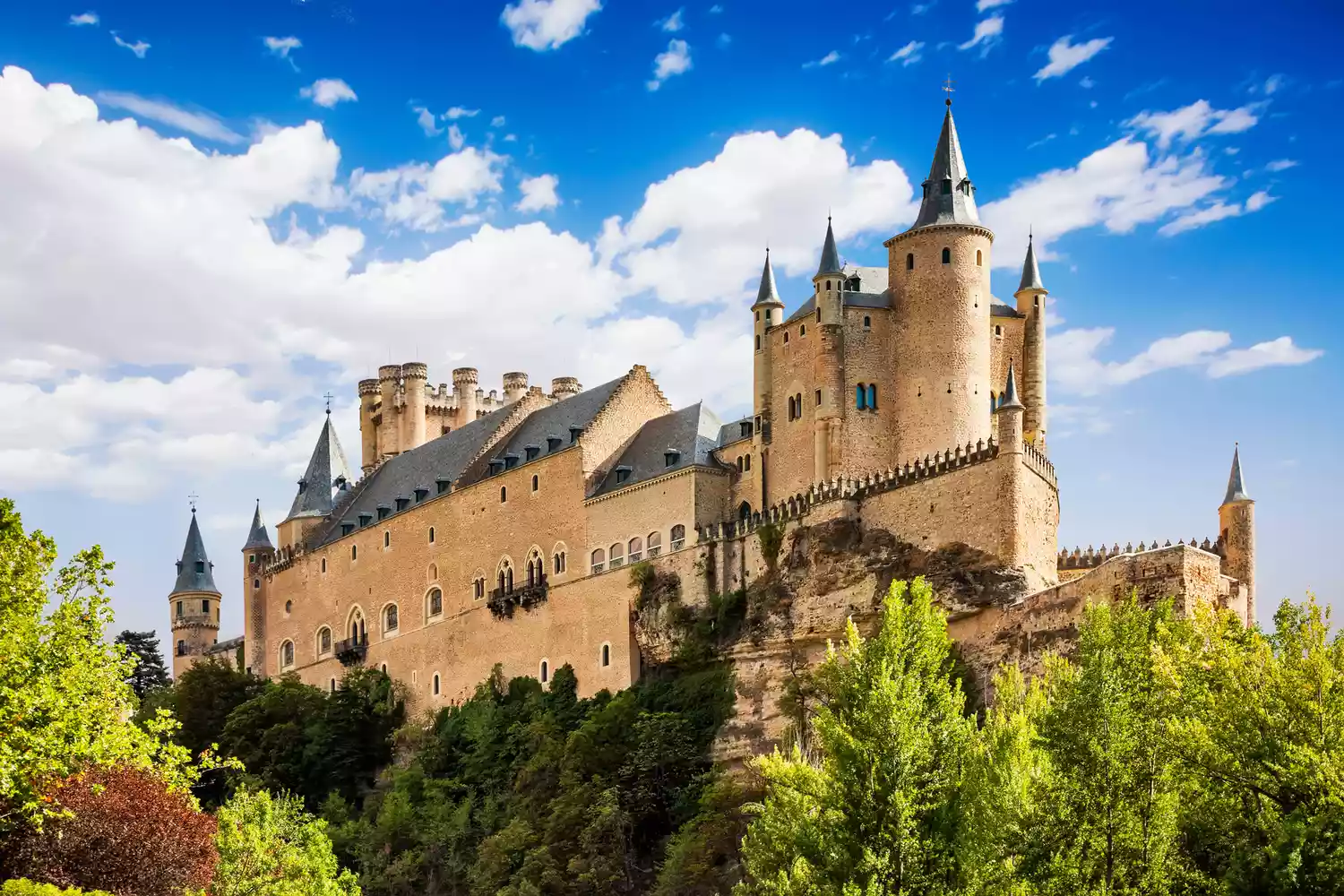
2. Alcázar of Segovia, Spain
Rising from a rocky crag between two rivers, the Alcázar looks less like a building and more like a ship sailing toward the horizon. This historic fortress has lived many lives: a Roman fort, a royal palace, a state prison, and a military academy. It is a stunning example of how royal residences evolved in the Iberian Peninsula.
- Must-See Detail: The Hall of Kings, featuring a gilded frieze depicting 52 seated monarchs.
- Logistics Sidebar: Nearest Airport: Madrid (MAD); Cost: €9; UNESCO Status: World Heritage Site.
3. Château de Chambord, France
In the heart of the Loire Valley, Chambord represents the absolute peak of the French Renaissance. Its skyline is a chaotic thicket of chimneys and spires, while the interior is famous for a double-helix staircase rumored to have been designed by Leonardo da Vinci.
- Must-See Detail: The rooftop terrace, which provides a panoramic view of the 13,000-acre forest domain.
- Logistics Sidebar: Nearest Airport: Paris Orly (ORY); Cost: €16; UNESCO Status: World Heritage Site.
4. Palace of Versailles, France
While often called a palace, Versailles began as a hunting lodge and expanded into a monumental landmark of absolute monarchy. It redefined the concept of royal residences, moving the center of power away from the defensive architecture of Paris to a sprawling estate of unparalleled luxury.
- Must-See Detail: The Hall of Mirrors, where 357 mirrors face seventeenth-century windows overlooking the gardens.
- Logistics Sidebar: Nearest Airport: Paris Charles de Gaulle (CDG); Cost: €19.50+; UNESCO Status: World Heritage Site.
5. Mont Saint-Michel, France
Though technically an abbey-fortress, Mont Saint-Michel remains one of the most famous castles in europe due to its unique tidal island location. For centuries, the rising tides acted as a natural moat, making it nearly impossible to capture during the Hundred Years' War.
- Must-See Detail: The Merveille, the Gothic living area for the monks, which seems to cling to the steep rock face.
- Logistics Sidebar: Nearest Airport: Rennes (RNS); Cost: Free to island, €13 for abbey; UNESCO Status: World Heritage Site.
British Isles: Medieval Strongholds & Legends
Across the English Channel, the stone masonry of the British Isles tells a grittier story. These structures were built for endurance and medieval warfare, standing as strategic strongholds that have weathered a thousand years of wind, rain, and rebellion. For those seeking the best castles in europe for history buffs, the United Kingdom offers an unrivaled density of ancient sites.
6. Windsor Castle, England
Windsor Castle in England is the world's oldest and largest inhabited castle, having served as a continuous royal residence for nearly 1,000 years. It combines the heavy circular shapes of Norman architecture with the delicate perpendicular Gothic style of St George’s Chapel.
- Must-See Detail: Queen Mary’s Dolls’ House, a perfect 1:12 scale miniature palace complete with running water and electricity.
- Logistics Sidebar: Nearest Airport: London Heathrow (LHR); Cost: Approx. £30; UNESCO Status: No.
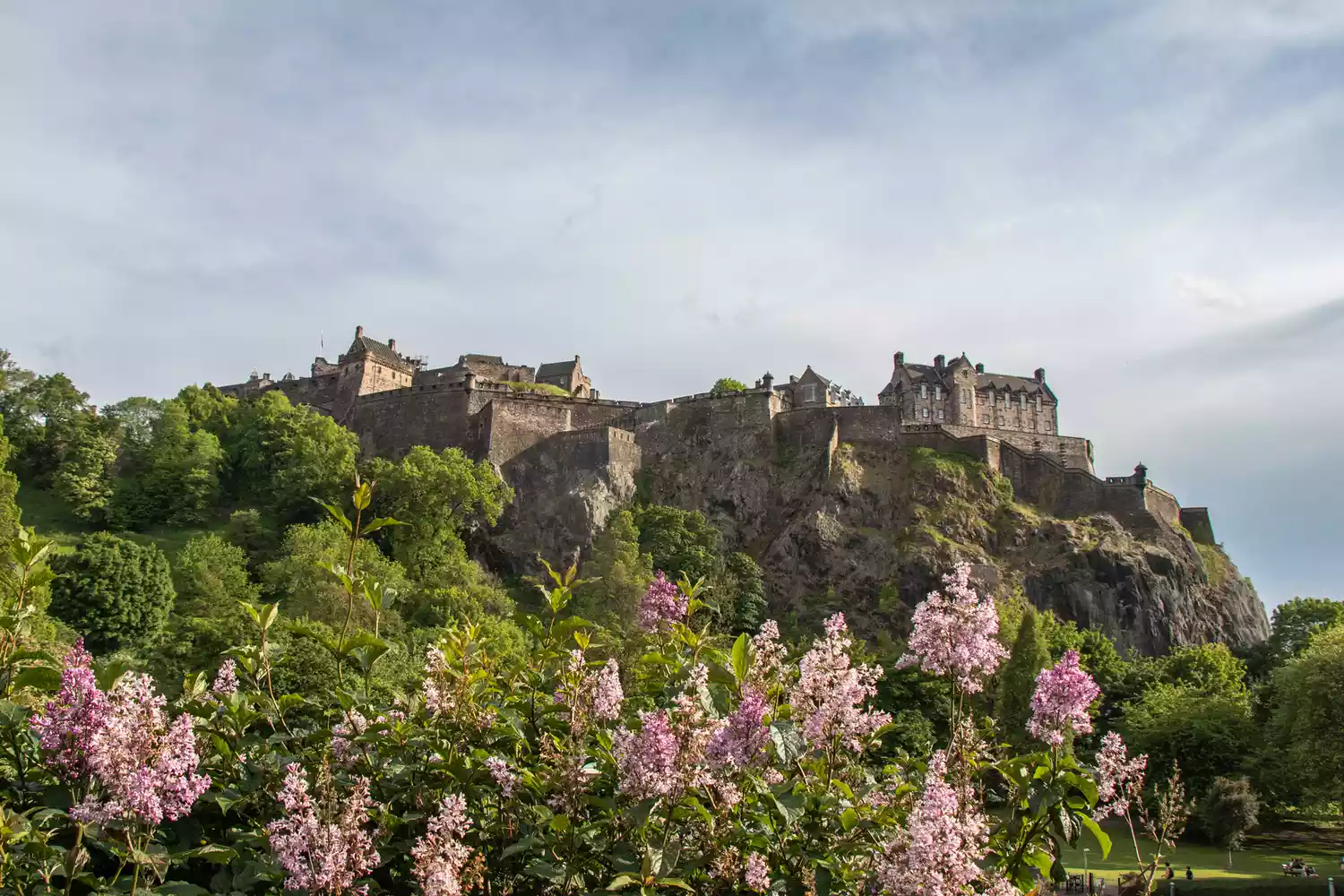
7. Edinburgh Castle, Scotland
Dominating the skyline of Scotland's capital, this fortress sits atop Castle Rock, a dormant volcano. It is one of the most famous castles in scotland, having endured 26 sieges throughout its history. The air here smells of salt and old gunpowder, particularly during the daily firing of the One O'Clock Gun.
- Must-See Detail: The Honours of Scotland, the oldest crown jewels in Britain.
- Logistics Sidebar: Nearest Airport: Edinburgh (EDI); Cost: £19.50; UNESCO Status: World Heritage Site.
8. Conwy Castle, Wales
Built by Edward I during his conquest of Wales, Conwy is a masterpiece of defensive architecture. Its eight massive towers provide a perfect example of a concentric castle design, where inner walls dominate outer ones to create layers of protection.
- Must-See Detail: The walk along the curtain walls, which offers views of the Snowdonia mountains.
- Logistics Sidebar: Nearest Airport: Liverpool (LPL); Cost: £11.90; UNESCO Status: World Heritage Site.
9. Dover Castle, England
Often called the Key to England, Dover Castle has stood guard over the shortest crossing to mainland Europe for centuries. Beneath its medieval keeps lie secret tunnels used during the Napoleonic Wars and the evacuation of Dunkirk in 1940, showcasing its ongoing cultural legacy.
- Must-See Detail: The Secret Wartime Tunnels, including the underground hospital.
- Logistics Sidebar: Nearest Airport: London Gatwick (LGW); Cost: £23; UNESCO Status: No.
10. Dunluce Castle, Northern Ireland
Clinging to the edge of a basalt cliff on the Antrim coast, the ruins of Dunluce Castle are hauntingly beautiful. Legends say the kitchen collapsed into the sea during a storm in 1639, taking the servants with it. It remains a hidden gem for those who love romantic ruins and dramatic coastal views.
- Must-See Detail: The Mermaid’s Cave, a cavern located directly beneath the castle.
- Logistics Sidebar: Nearest Airport: Belfast International (BFS); Cost: £6; UNESCO Status: No.
Central & Eastern European Marvels
In Central and Eastern Europe, the scale of famous medieval castles reaches gargantuan proportions. These heavy brick and stone structures were designed to protect trade routes and stand against Eastern invasions. The region is home to some of the largest feudal fortifications ever constructed, many of which are preserved as unesco world heritage castles to visit.
11. Malbork Castle, Poland
Malbork Castle in Poland is the largest castle in the world by land area, with its outer walls enclosing approximately 143,591 square meters. Built by the Teutonic Knights in a striking red-brick Gothic style, it was a religious and military center that projected power across the Baltic.
- Must-See Detail: The Grand Refectory, an enormous vaulted hall supported by a single slender column.
- Logistics Sidebar: Nearest Airport: Gdańsk (GDN); Cost: Approx. €15; UNESCO Status: World Heritage Site.
12. Prague Castle, Czech Republic
Prague Castle in the Czech Republic is recognized by Guinness World Records as the largest ancient castle complex in the world, occupying an area of roughly 70,000 square meters. It is a city within a city, blending Romanesque, Gothic, and Baroque styles.
- Must-See Detail: Golden Lane, a row of tiny, colorful houses where goldsmiths and even Franz Kafka once lived.
- Logistics Sidebar: Nearest Airport: Prague (PRG); Cost: Approx. €10; UNESCO Status: World Heritage Site.
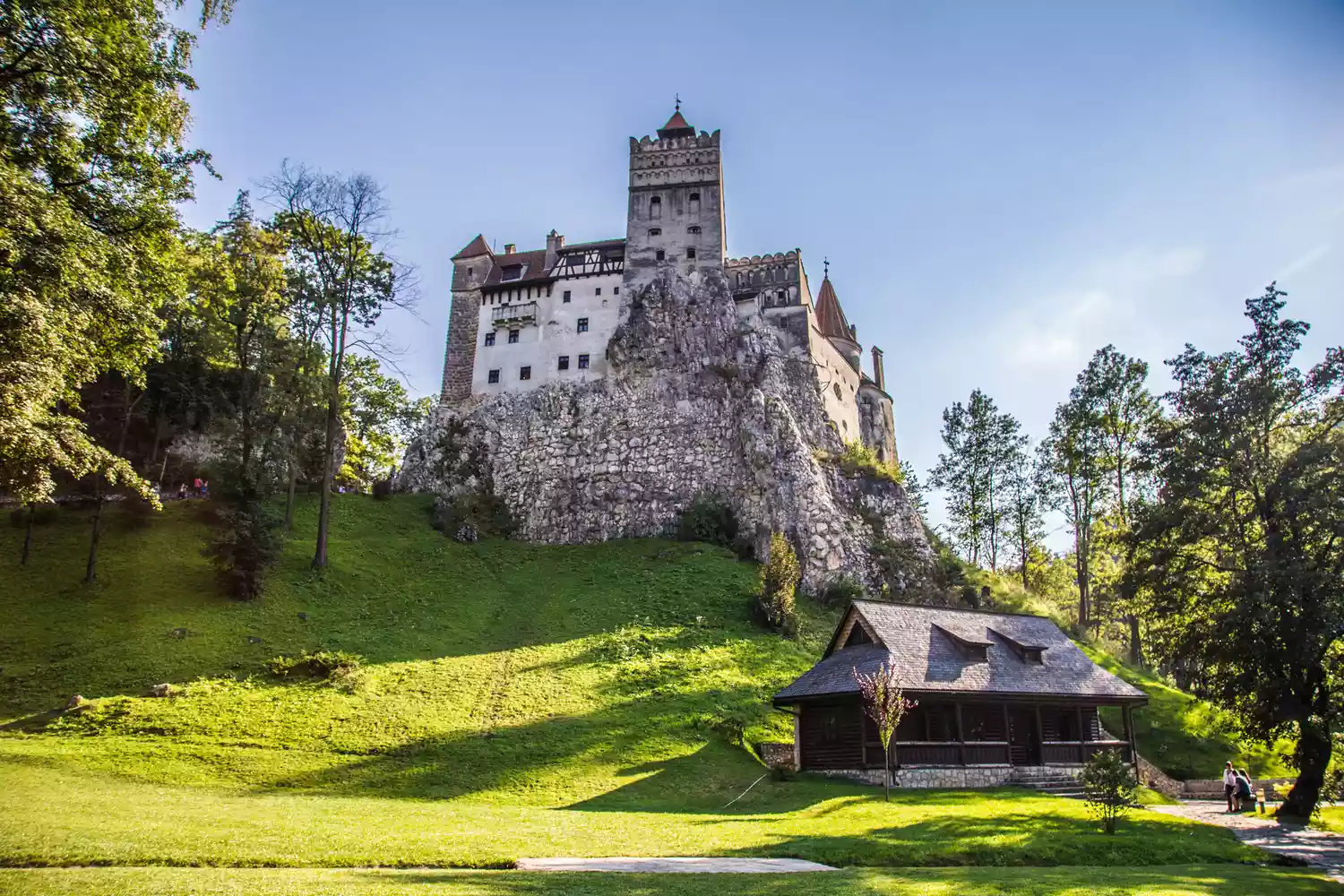
13. Bran Castle, Romania
Perched on the border between Transylvania and Wallachia, Bran Castle is synonymous with the legend of Dracula. While its link to Vlad the Impaler is tenuous, the castle’s narrow winding stairways and timber-framed rooms perfectly capture the atmospheric Gothic style of the region.
- Must-See Detail: The secret staircase connecting the first and third floors, hidden behind a false fireplace.
- Logistics Sidebar: Nearest Airport: Bucharest (OTP); Cost: €12; UNESCO Status: No.
14. Castel del Monte, Italy
Isolated on a hill in Puglia, Castel del Monte is an architectural mystery. Built by Emperor Frederick II in the 13th century, its precise octagonal geometry lacks traditional defensive architecture like moats or drawbridges. Some believe it was built as a palace of mathematical symbolism rather than a military fort.
- Must-See Detail: The mathematical repetition of the number eight in every aspect of the design.
- Logistics Sidebar: Nearest Airport: Bari (BRI); Cost: €7; UNESCO Status: World Heritage Site.
15. Eltz Castle, Germany
Tucked away in a secluded valley near the Moselle River, Eltz Castle has remained in the possession of the same family for over 800 years. Because it was never destroyed, it offers an authentic look at famous castles in germany that haven't been heavily reconstructed in modern times.
- Must-See Detail: The treasury and armory, containing one of the finest collections of medieval gold and silver work.
- Logistics Sidebar: Nearest Airport: Frankfurt (FRA); Cost: €14; UNESCO Status: No.
Asia’s Magnificent Fortresses
The concept of a castle is not limited to Europe. In East Asia, feudal fortifications took on a different but equally impressive form. Utilizing a mixture of stone bases and intricate layered woodwork, these structures served as the physical manifestation of a shogun’s or monarch's authority. These are some of the most famous castles in the world for their unique harmony with the natural landscape.
16. Himeji Castle, Japan
Known as the White Heron Castle because of its brilliant white exterior and resembles a bird taking flight, Himeji is Japan's most spectacular surviving feudal fortress. Its complex maze of paths and gates was designed to confuse attackers, a hallmark of Japanese strategic strongholds.
- Must-See Detail: The main keep, standing six stories tall with an elaborate system of defensive fish-shaped roof tiles called shachihoko.
- Logistics Sidebar: Nearest Airport: Kansai International (KIX); Cost: 1,000 JPY; UNESCO Status: World Heritage Site.
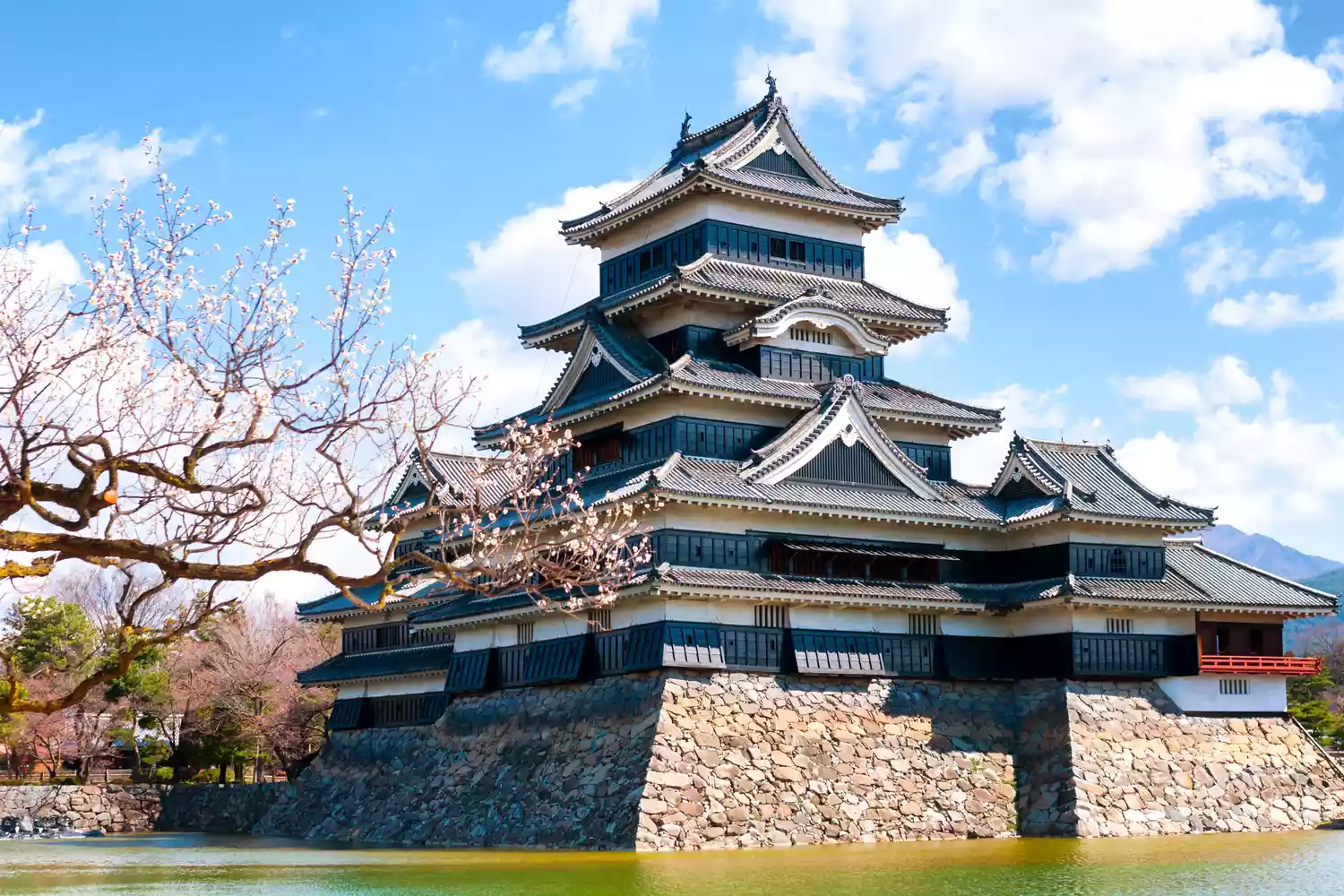
17. Matsumoto Castle, Japan
Matsumoto Castle stands in stark contrast to Himeji. Its black wood and stone masonry have earned it the nickname the Black Crow. It is one of the few famous medieval castles in Japan built on a plain rather than a hill, surrounded by a wide, peaceful moat.
- Must-See Detail: The Moon Viewing Pavilion, added in 1633 during a time of peace.
- Logistics Sidebar: Nearest Airport: Matsumoto (MMJ); Cost: 700 JPY; UNESCO Status: No.
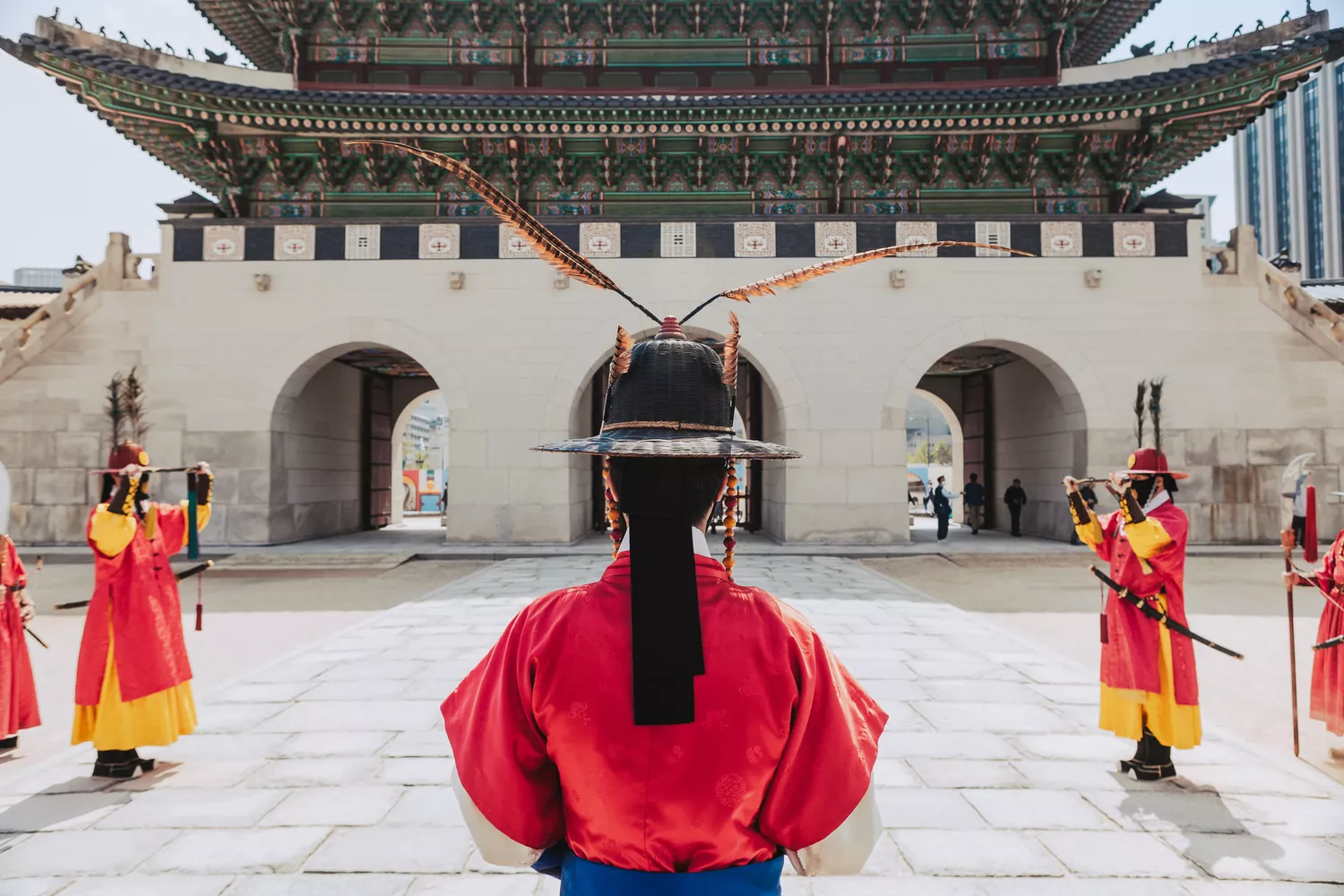
18. Gyeongbokgung Palace, South Korea
As the main royal palace of the Joseon dynasty, Gyeongbokgung represents the height of Korean cultural legacy. While much of it was destroyed during the Japanese occupation, ongoing heritage preservation has restored its monumental landmarks, including the grand throne hall and floating pavilions.
- Must-See Detail: The Gyeonghoeru Pavilion, a grand banquet hall situated in the middle of a man-made lake.
- Logistics Sidebar: Nearest Airport: Incheon (ICN); Cost: 3,000 KRW; UNESCO Status: No.
19. Hwaseong Fortress, South Korea
Unlike a single castle building, Hwaseong is a massive wall surrounding the city of Suwon. Built in the late 18th century, it was an innovative feat of military engineering that combined Eastern and Western defensive theories, featuring artillery bastions and observation towers.
- Must-See Detail: Hwahongmun, the beautiful water gate through which the Gwanggyochoen stream flows.
- Logistics Sidebar: Nearest Airport: Incheon (ICN); Cost: 1,000 KRW; UNESCO Status: World Heritage Site.
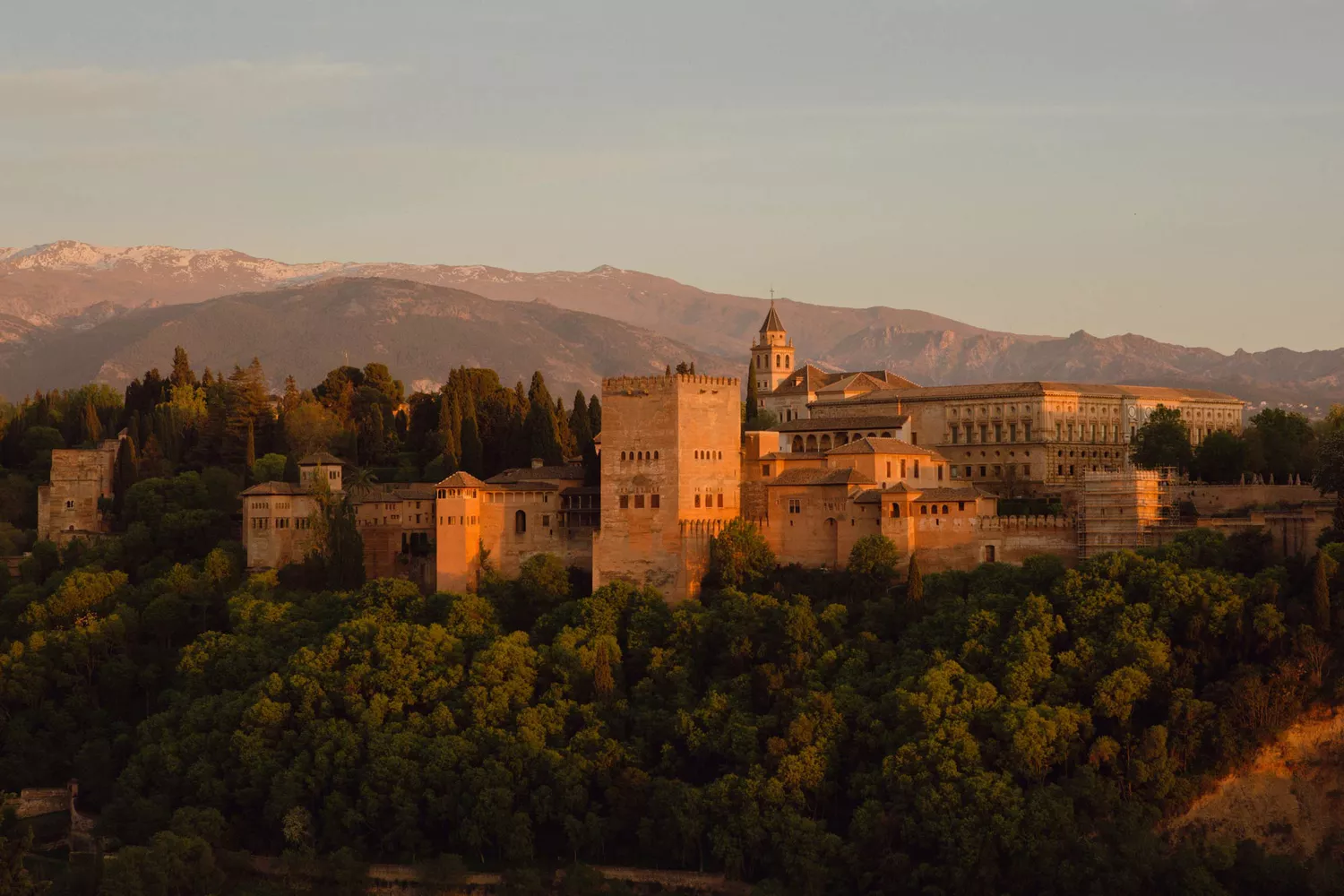
20. The Alhambra, Spain
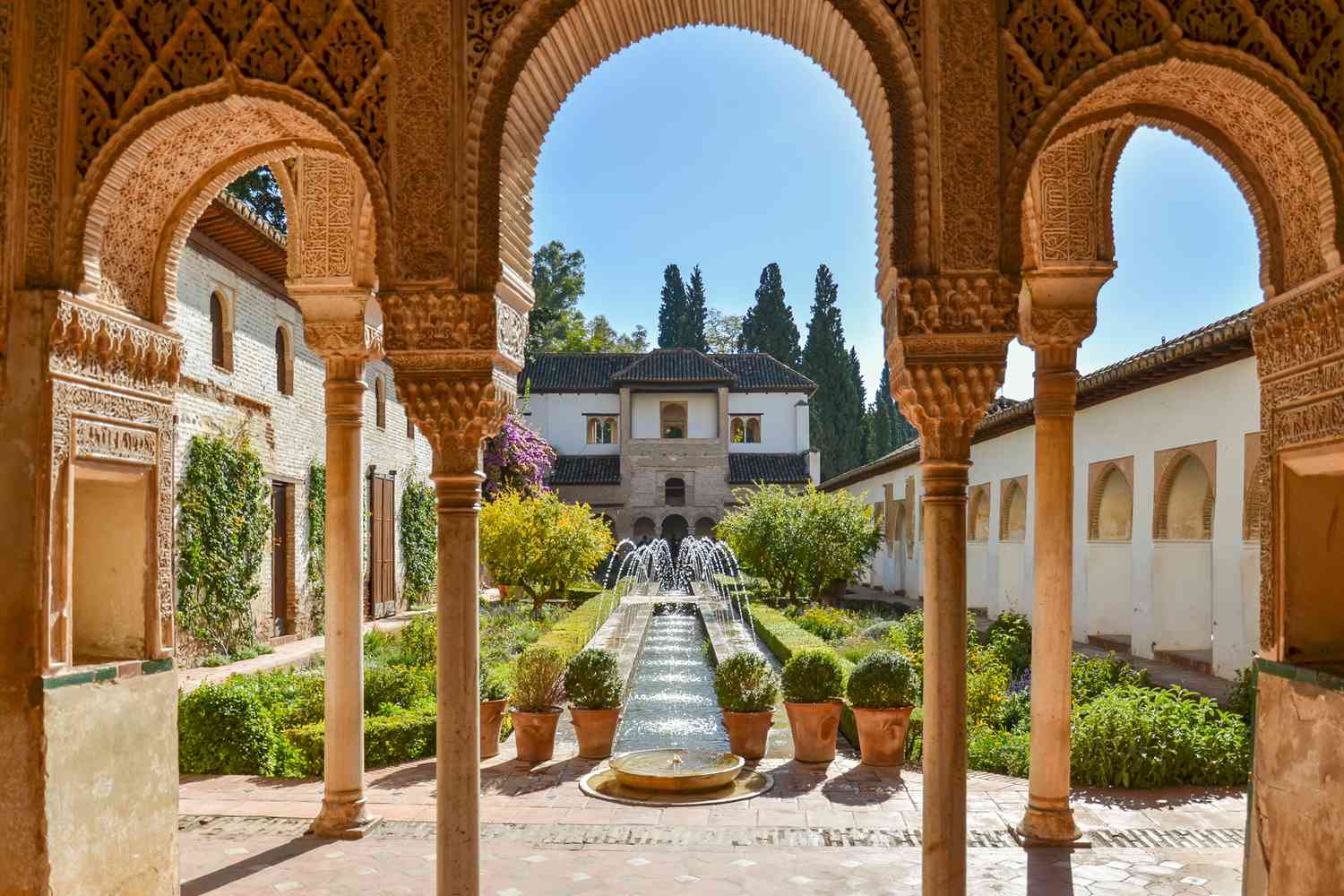
While we end back in Europe, the Alhambra’s Nasrid architecture bridges the gap between East and West. This palace-fortress in Granada is a peak example of Moorish stone masonry and irrigation, featuring intricate stucco work and courtyards designed to evoke an earthly paradise.
- Must-See Detail: The Court of the Lions, centered around a fountain supported by twelve marble lions.
- Logistics Sidebar: Nearest Airport: Málaga (AGP); Cost: €14; UNESCO Status: World Heritage Site.
Practical Logistics for History Buffs
Visiting these famous castles requires a bit of planning to avoid the largest crowds. The shoulder seasons—late spring and early autumn—offer the best Balance of mild weather and manageable queues. For high-demand sites like Neuschwanstein or the Alhambra, it is essential to book your tickets weeks, if not months, in advance.
When visiting, I always recommend wearing comfortable shoes with good grip. The ancient cobblestones at Edinburgh Castle or the steep wooden stairs of Himeji Castle can be unforgiving. If you are a serious photography enthusiast, aim for the golden hour; no sight is more evocative than the sun setting behind the crenelated walls of a medieval fort. Lastly, consider purchasing a regional heritage pass, such as the Japan Rail Pass for castle-hopping in Japan or the English Heritage pass in the UK, to save on entry fees across multiple sites.
FAQ
What are the top 10 castles in the world?
The most highly-regarded castles globally include Neuschwanstein in Germany, Himeji in Japan, Windsor in England, Edinburgh in Scotland, and Prague Castle in the Czech Republic. Completing the list are the Alcázar of Segovia in Spain, Malbork in Poland, Mont Saint-Michel in France, Bran Castle in Romania, and the Château de Chambord in France.
What is the world's most famous castle?
Neuschwanstein Castle in Germany is widely considered the world's most famous castle. Its fairytale appearance famously served as the inspiration for the Sleeping Beauty Castle at Disneyland, making its Silhouette recognizable to millions of people around the globe.
What are the names of some famous castles?
Beyond the major icons, other famous names include Eltz Castle in Germany, Conwy Castle in Wales, Matsumoto Castle in Japan, and the Alhambra in Spain. Each of these structures is celebrated for its specific architectural style and its role in regional history.
What are the top 5 biggest castles in the world?
By land area, the five largest include Malbork Castle in Poland, Prague Castle in the Czech Republic, Mehrangarh Fort in India, Windsor Castle in England, and Hohensalzburg Fortress in Austria. These complexes often include multiple buildings, courtyards, and fortifications within their primary curtain walls.
What are the 12 original castles?
In the context of Japanese travel, the term refers to the 12 Original Castles (Genzon 12 Tenshu). These are the only Japanese castles that still possess their original main keeps from the feudal era, including Himeji, Matsumoto, Hikone, and Inuyama, having survived fires, wars, and modernization.