Quick Facts
- Duration: The excursion lasts approximately three hours from departure to return.
- Departure Point: All trips begin at the historic Nevada Northern Railway Depot in Ely, Nevada.
- Booking Window: Tickets go on sale every August for the following year's season and sell out almost instantly.
- Altitude: The viewing location sits at an elevation of roughly 6,500 feet, providing exceptional atmospheric clarity.
- Key Partners: Guided by National Park Service Dark Rangers and experts from the Great Basin National Park.
- Tech Provided: Passengers receive red-light necklaces to preserve night vision while moving between telescopes.
The Great Basin Star Train is a specialized night sky tour departing from Ely, Nevada, taking passengers into the high desert for guided stargazing with professional telescopes and NPS Dark Rangers. It is widely considered one of the premier Nevada Northern Railway night sky tours, offering access to some of the most pristine celestial views in the continental United States.
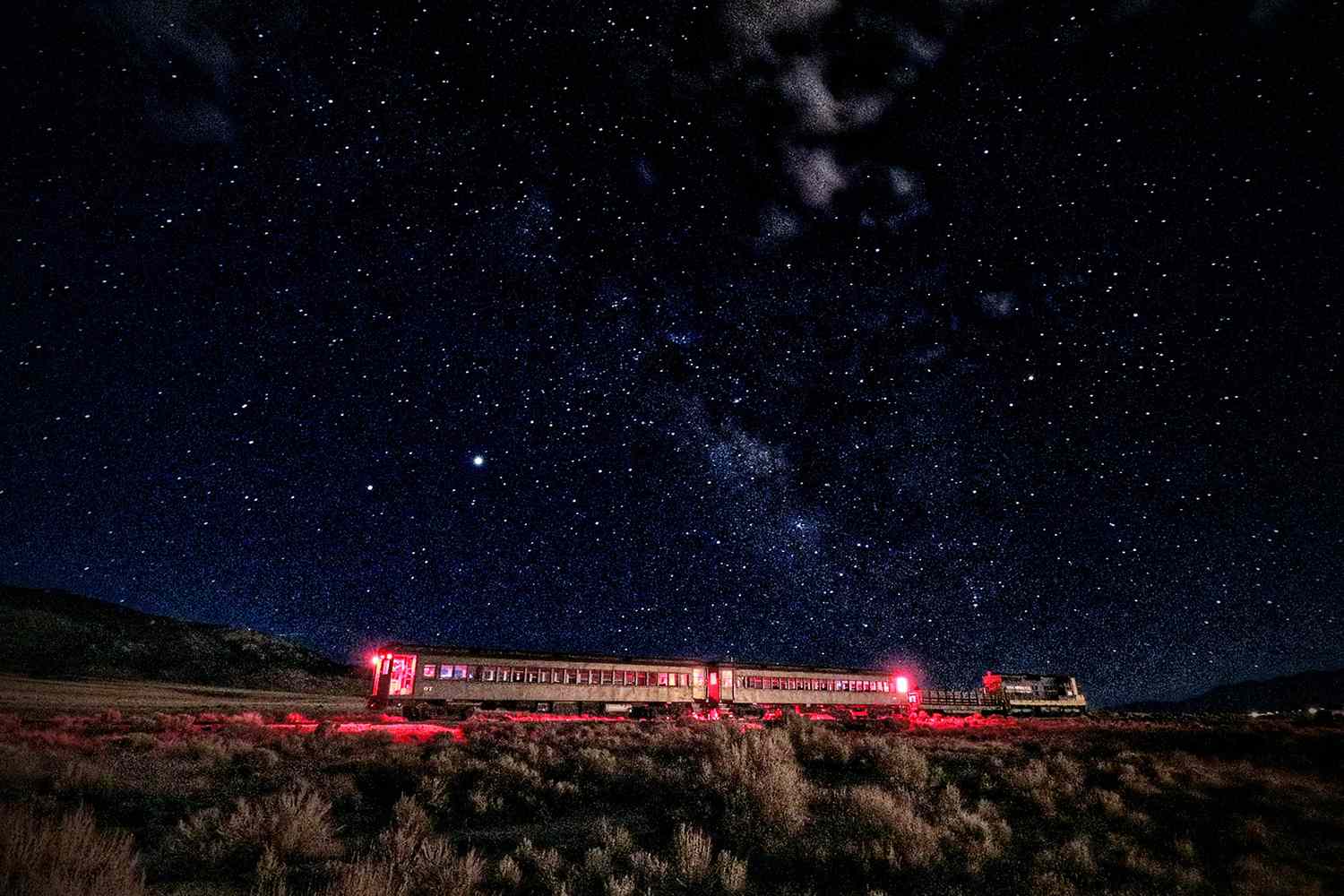
In the quiet corners of the Inter-Mountain West, where the sagebrush meets the silence of the high desert, there is a kind of darkness that feels ancient. It is not the oppressive darkness of a closed room, but rather a transparent, velvet void that reveals the true scale of the cosmos. For those seeking this specific brand of solitude, the Great Basin Star Train offers a bridge between the industrial grit of the early 20th century and the timeless science of astronomy.
Setting out from the East Ely Railroad Depot, passengers leave behind the faint glow of the town to enter Steptoe Valley. The train itself is a rolling museum, part of the Nevada Northern Railway’s heritage railroad that has survived for over a century. However, once the sun dips below the Egan Range and the vintage cars rattle out into the flats, the focus shifts from the rails beneath to the galaxies above.
The Booking Window: How to Secure Tickets
If you are planning a Great Basin Star Train trip in Ely Nevada, the most important tool in your arsenal is a calendar. This is not a journey you can decide on a whim over a weekend. Demand for these excursions has skyrocketed as astrotourism becomes a pillar of the regional economy. According to the Nevada Northern Railway, the annual ridership for its historic excursions has increased from 6,000 to over 16,000 passengers in recent years. This surge in popularity means that the booking window is narrow and highly competitive.
Tickets for the entire following year typically go on sale in August. For instance, if you wish to see the Milky Way in July of next year, you must be online and ready to purchase the previous August. The urgency is well-founded; most dates are fully booked within hours of being released. This high demand is a boon for the local community, as tourism officials estimate these train excursions generate an annual economic impact of approximately $2.5 million for the surrounding rural area.
When searching for the best time of year for stargazing at Star Flat Nevada, consider the moon cycle. The railway schedules these trips around the new moon to ensure the least amount of natural light interference. While summer offers the most comfortable temperatures, the crisp air of late spring or early autumn often provides the sharpest planetary views.
The Experience: Science Under the Stars at Star Flat
The journey begins as the conductor’s whistle echoes off the canyon walls. The Great Basin Star Train travels approximately 11 miles from Ely, Nevada, deep into the basin floor to a location known as Star Flat. This remote stretch of the Steptoe Valley was selected specifically for its lack of light pollution and its high-altitude desert environment.
Since 2016, this region has been part of a designated International Dark Sky Park area. This status is not merely a label; it represents a commitment to preserving the natural night. The atmospheric clarity at 6,500 feet is remarkable. Without the haze of humidity or the glare of urban sprawl, the stars do not just twinkle; they burn with a steady, fierce light.
Once the train reaches Star Flat, the engines are hushed, and the real show begins. Passengers disembark into the darkness, guided by the soft red glow of provided necklaces. Waiting for them are the Dark Rangers. These are not just park employees but dedicated astronomy experts, often joined by researchers from institutions like Caltech. They bring with them high-powered telescopes capable of resolving deep-sky objects that are invisible to the naked eye.
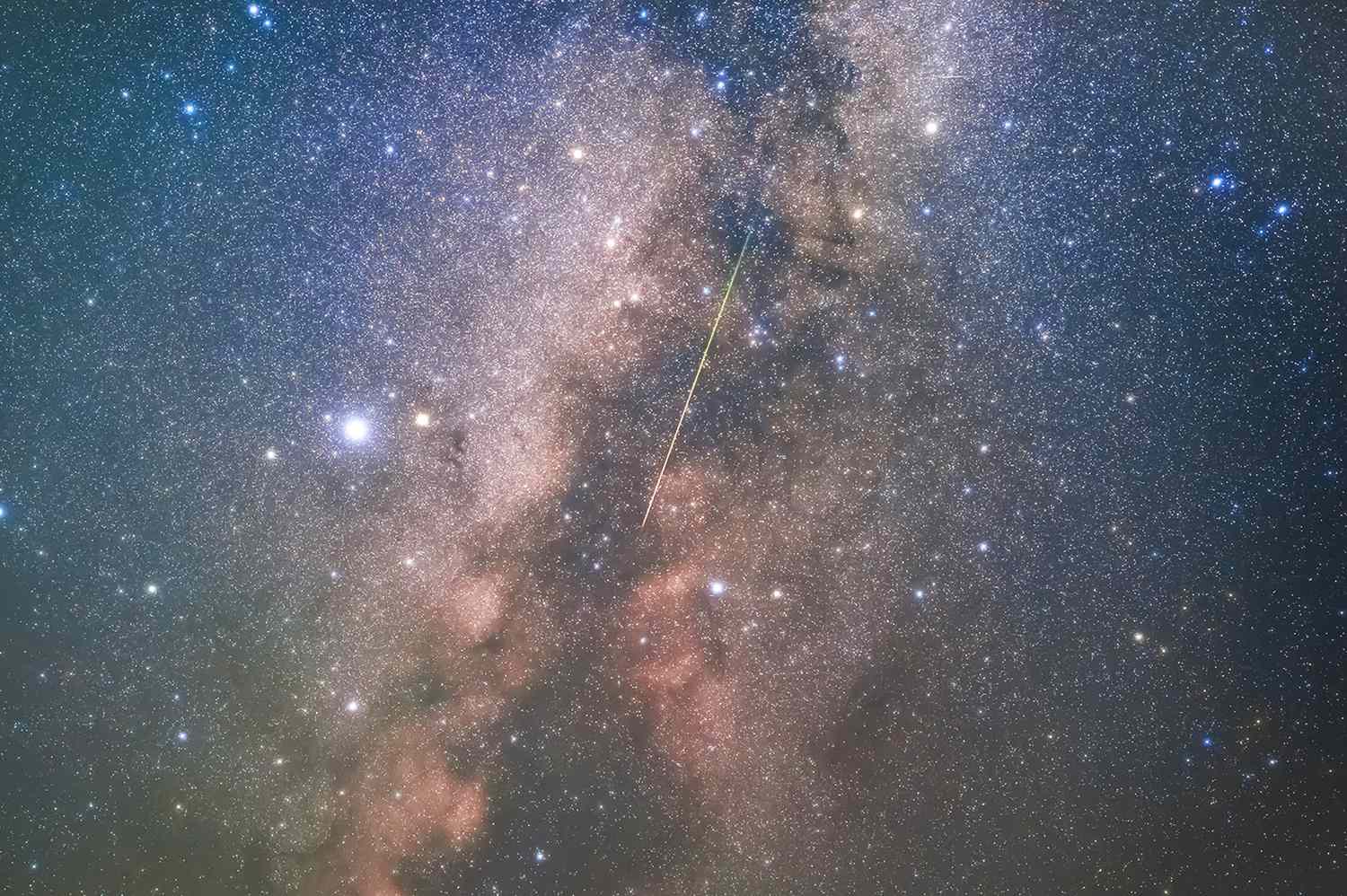
On a clear night, the visibility allows for a spectacular tour of the heavens. You might find yourself staring into the rings of Saturn, the swirling dust lanes of the Andromeda Galaxy, or the phosphorescent clusters of the Milky Way. The Dark Rangers provide a narrative for the evening, weaving together the physics of light with the mythology of the constellations, making the vastness of space feel momentarily accessible.
High Desert Stargazing Packing List & Etiquette
Preparation is the key to enjoying a heritage railroad trip in the desert. While the days in Ely can be searing, the temperature in the high-altitude desert drops precipitously once the sun disappears. The lack of cloud cover means there is nothing to trap the heat, and a quiet night at Star Flat can feel more like an alpine winter than a desert summer.
A proper high desert stargazing packing list must prioritize thermal management. Even if the forecast seems mild, the wind across the basin can be biting. Furthermore, the terrain at the viewing site is natural desert ground—uneven and covered in sagebrush—making proper footwear a safety requirement.
- Layered Clothing: Start with a moisture-wicking base and add a heavy fleece or down jacket. A hat and gloves are rarely a bad idea, even in July.
- Closed-Toe Shoes: Essential gear list for Great Basin Star Train passengers always includes sturdy boots or sneakers. Sandals or heels are impractical for the rough terrain.
- Red-Light Etiquette: The railway provides red-light technology because red light does not reset the human eye's night vision. The use of white flashlights, glowing phone screens, or camera flashes is strictly discouraged as it ruins the experience for everyone else.
- Binoculars: While the train provides telescopes, bringing your own binoculars can offer a wide-field view of the stellar nurseries within the Milky Way while you wait for your turn at the tripod.
Avoid bringing large personal telescopes unless you have cleared it with the staff, as space on the train can be limited and the professional equipment provided is usually superior to consumer-grade gear.
Comparing Excursions: Star Train vs. Sunset Stars and Champagne
For many travelers, the choice between the primary Great Basin Star Train and the Sunset Stars and Champagne ride is a matter of intent. While both capitalize on the Nevada Northern Railway night sky tours reputation, they offer distinctly different atmospheres.
| Feature | Great Basin Star Train | Sunset Stars and Champagne |
|---|---|---|
| Primary Focus | Scientific observation & education | Romantic atmosphere & scenery |
| Guides | NPS Dark Rangers | Railway staff & historians |
| Equipment | High-powered astronomical telescopes | Limited/Binoculars |
| Refreshments | Water and light snacks | Champagne toast & appetizers |
| Vibe | Quiet, educational, and awe-inspiring | Social, festive, and relaxed |
If your goal is to understand the mechanics of the cosmos and see deep-sky objects through professional lenses, the Star Train is the definitive choice. However, if you prefer to watch the colors of the desert sunset fade into a canopy of stars while enjoying a glass of bubbly, the Sunset ride offers a more social entry point into astrotourism.
FAQ
What is the Great Basin Star Train?
This is a three-hour rail excursion that takes passengers from the town of Ely into the remote desert for a guided stargazing session led by astronomical experts and National Park Rangers.
Where does the Great Basin Star Train depart from?
The train departs from the East Ely Railroad Depot, located at 1100 Avenue A, Ely, NV 89301.
How much do tickets for the Star Train cost?
Ticket prices generally range from $50 to $60 for adults and around $25 to $30 for children, though prices are subject to change based on the season and specific equipment used (steam vs. diesel).
When do tickets for the Star Train usually go on sale?
Tickets typically go on sale in August for the entirety of the following year's operating season.
Do Star Train tickets sell out fast?
Yes, tickets are extremely popular and frequently sell out within the first few days—or even hours—of their August release.
What should I bring on the Great Basin Star Train?
Passengers should bring warm layers, closed-toe shoes, and perhaps a pair of binoculars. Avoid bringing white-light flashlights or professional photography gear that requires a flash.
Plan Your Adventure to Ely
Planning a Great Basin Star Train trip in Ely Nevada requires foresight, but the reward is an experience that few other places on Earth can replicate. To round out your trip, arrive in town early and visit the Nevada Northern Railway museum during the day. Often, the staff will have solar telescopes set up at the depot, allowing you to view sunspots and solar flares before your evening journey begins.
Whether you are a seasoned amateur astronomer or someone who simply hasn't seen the Milky Way since childhood, the train provides a rare opportunity to reconnect with the night sky. In the silence of the Steptoe Valley, with the smell of old iron and sagebrush in the air, the stars feel less like distant points of light and more like a destination. Ensure you book early, pack for the cold, and prepare to see the universe in its most honest form.