Quick Facts
- Elevation Gain: 30m to 2,451m (Highest narrow-gauge in Asia)
- Global Recognition: Ranked 19th on the NYT '52 Places to Go' in 2025
- Heritage Engineering: Possesses four of the five UNESCO mountain railway characteristics
- Booking Window: 14 days in advance at 06:00 AM Taiwan Time
- Logistics Update: New 2026 "pay immediately" policy for digital reservations
- Route Highlights: 77 tunnels, 50 bridges, and the Dulishan Spiral
- Climate Diversity: Traverses 4 distinct bio-zones from palms to alpine firs
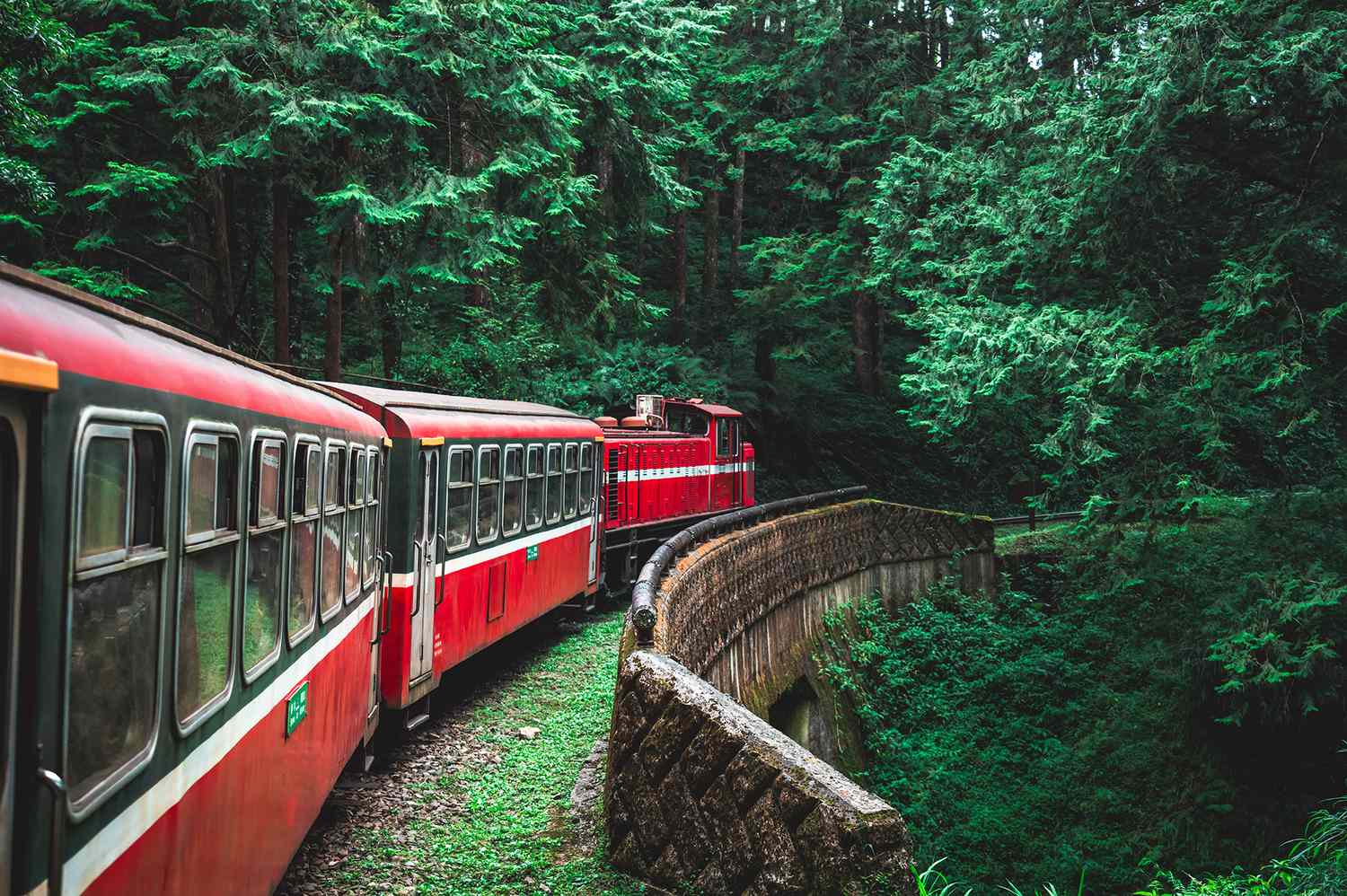
The Alishan Forest Railway is a historic narrow-gauge system in Taiwan famous for its Dulishan Spiral engineering and 1912 colonial-era history. It is the highest narrow-gauge mountain railway in Asia, ascending from an elevation of 30 meters at Chiayi Station to an altitude of 2,451 meters at Zhushan Station, traversing four climate zones through the Yushan mountain range.
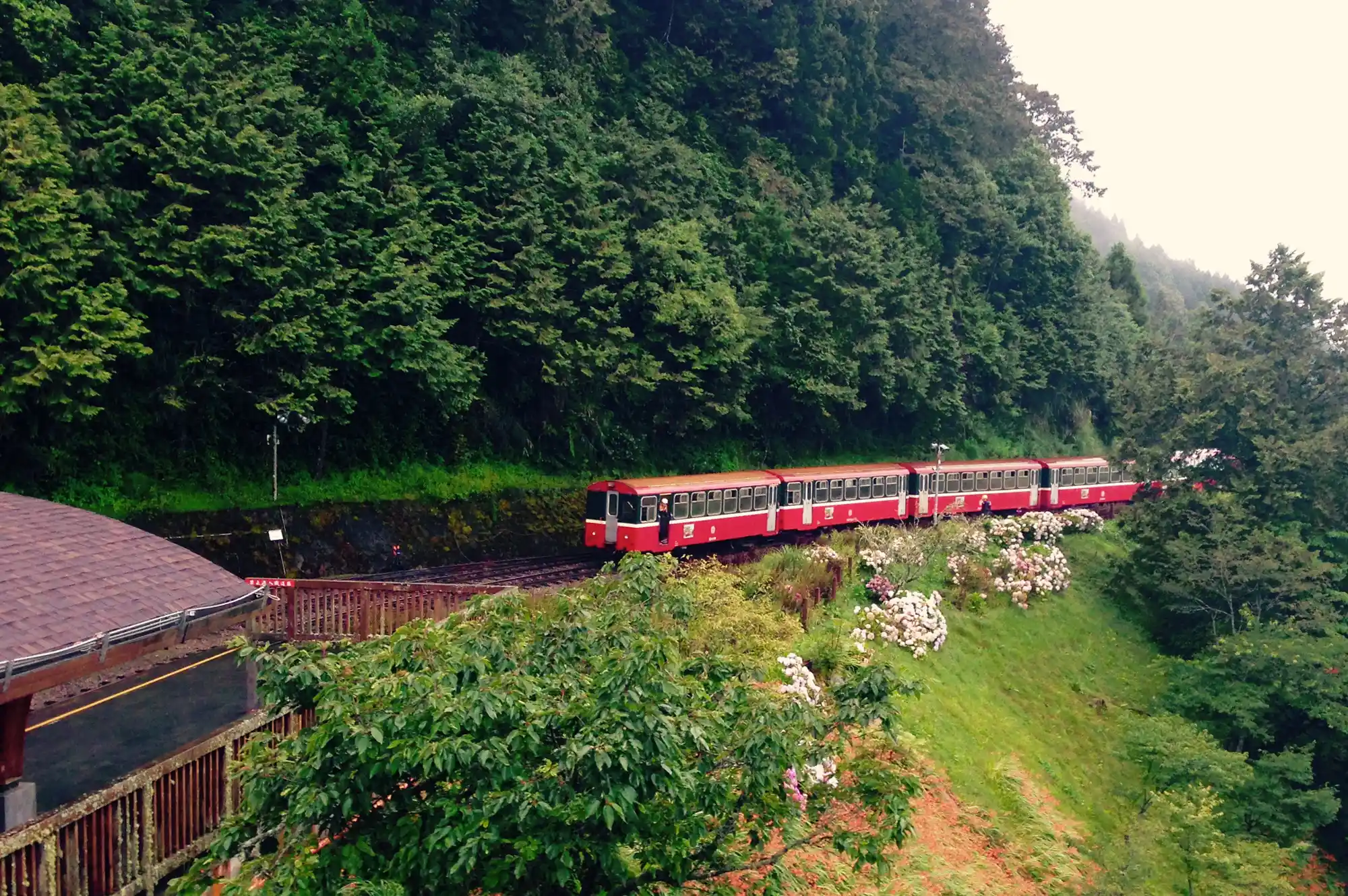
There is something inherently romantic about slow travel, especially when it involves a century-old logging train puffing its way through a sea of clouds. For decades, the full Chiayi to Alishan train route was a fragmented dream, sidelined by typhoons and seismic shifts. But in 2026, the entire line stands fully restored, inviting travelers to experience one of the greatest feats of early 20th-century engineering. This isn't just a commute into the mountains; it is a three-dimensional history lesson that carries you from the humid tropical plains of southwestern Taiwan to the frigid, mist-shrouded ancient cypress groves of the high peaks.
2026 Booking Guide: Beating the 6 AM Gauntlet
Securing a seat on the Alishan Forest Railway is arguably more difficult than the climb itself. The demand for heritage rail travel has skyrocketed since the line's full reopening, and the booking system reflects this intensity. If you intend to ride the main line from Chiayi, you must adhere to the 14-day rule. Tickets go live exactly 14 days before departure at 06:00 AM Taiwan Time. For an international traveler, this often means setting an alarm for the middle of the night.
In March 2026, the railway administration introduced a strict pay-immediately policy. In previous years, travelers had a grace period of a few days to settle their balance. Now, the moment you secure your seats in the digital queue, you must complete the credit card transaction or the tickets will be released back into the pool within minutes.
Warning: A digital receipt or QR code on your phone is not a valid boarding pass. You must collect your physical tickets at the station window or a designated kiosk in Chiayi before departure. The lines at Chiayi Station can be long, so arrive at least 45 minutes before the whistle blows.
If the online portal shows as sold out, don't despair immediately. Check the site again at 06:10 AM as carts expire, and as a last resort, check for last-minute cancellations at the Beimen Forest Railway Park or Chiayi Station windows on the morning of travel.
Engineering Marvels: The Dulishan Spiral and Zigzags
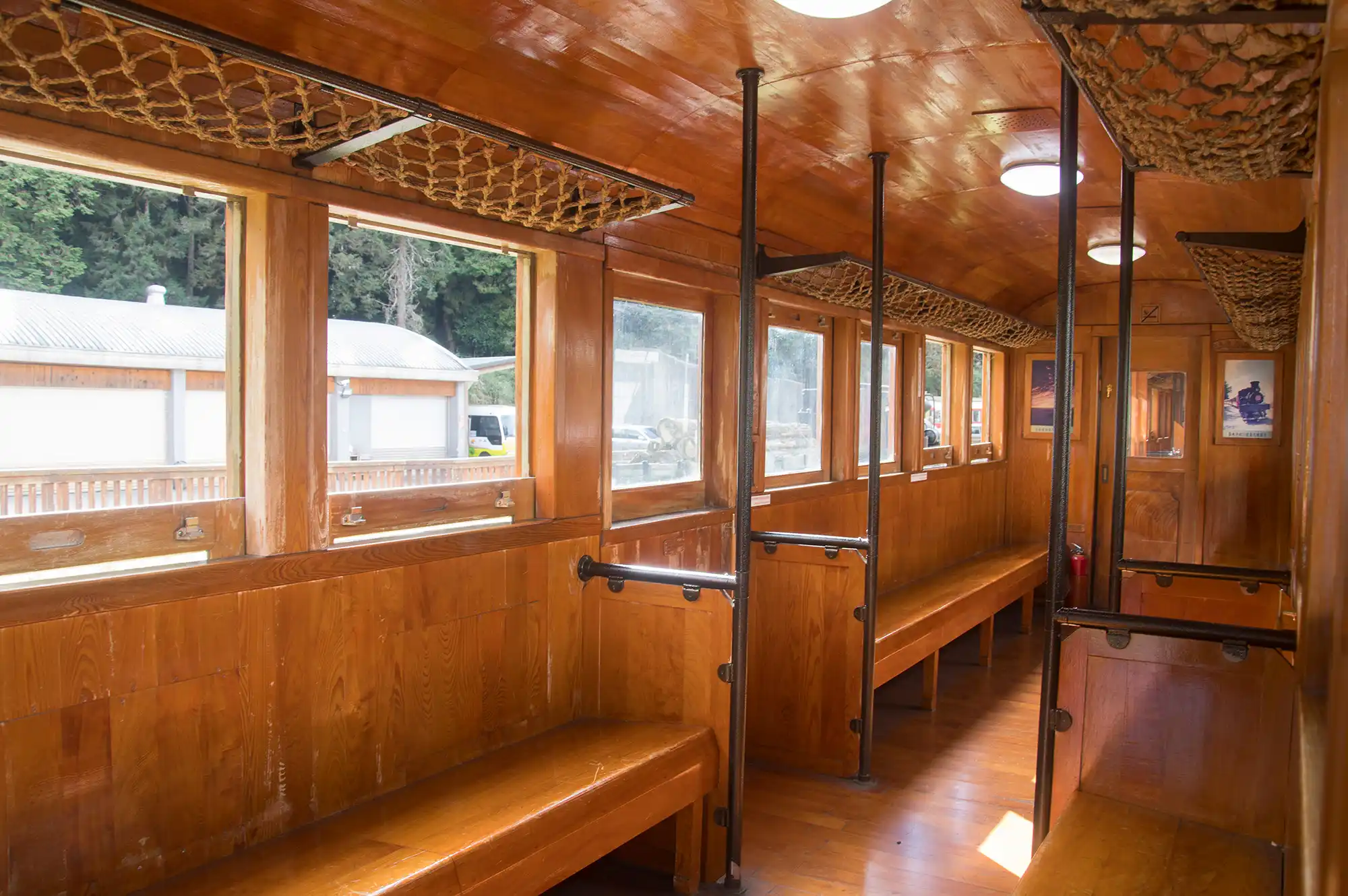
To understand why this train is so significant, one must look at the constraints faced by the engineers in 1912. The Yushan mountain range is steep, unstable, and prone to heavy rainfall. Building a standard railway here was impossible. Instead, the engineers employed a narrow-gauge system and three specific technical solutions that have earned the line international acclaim.
The most famous feature is the Dulishan Spiral engineering. As the train approaches Dulishan, it encounters a wall of rock too steep for a direct ascent. The solution was to have the train loop around the mountain three times in a series of ascending circles before finally exiting in a figure-eight. It is a dizzying, brilliant piece of work that allows the train to gain significant elevation without a massive footprint.
Beyond the spirals, the Alishan Forest Railway uses Z-shaped switchbacks, colloquially known as the "train reversing" sections. When the gradient becomes too sharp even for a spiral, the train enters a dead-end siding, the conductor switches the track points, and the locomotive pushes the carriages uphill in the opposite direction. This zig-zagging continues until the train reaches a manageable incline. This is one of the key reasons why the route is noted for having four of the five UNESCO-defined mountainous railway characteristics, including the historic use of Shay-style steam locomotives for special events.
The Journey: From Tropical Palms to Frigid Cypresses
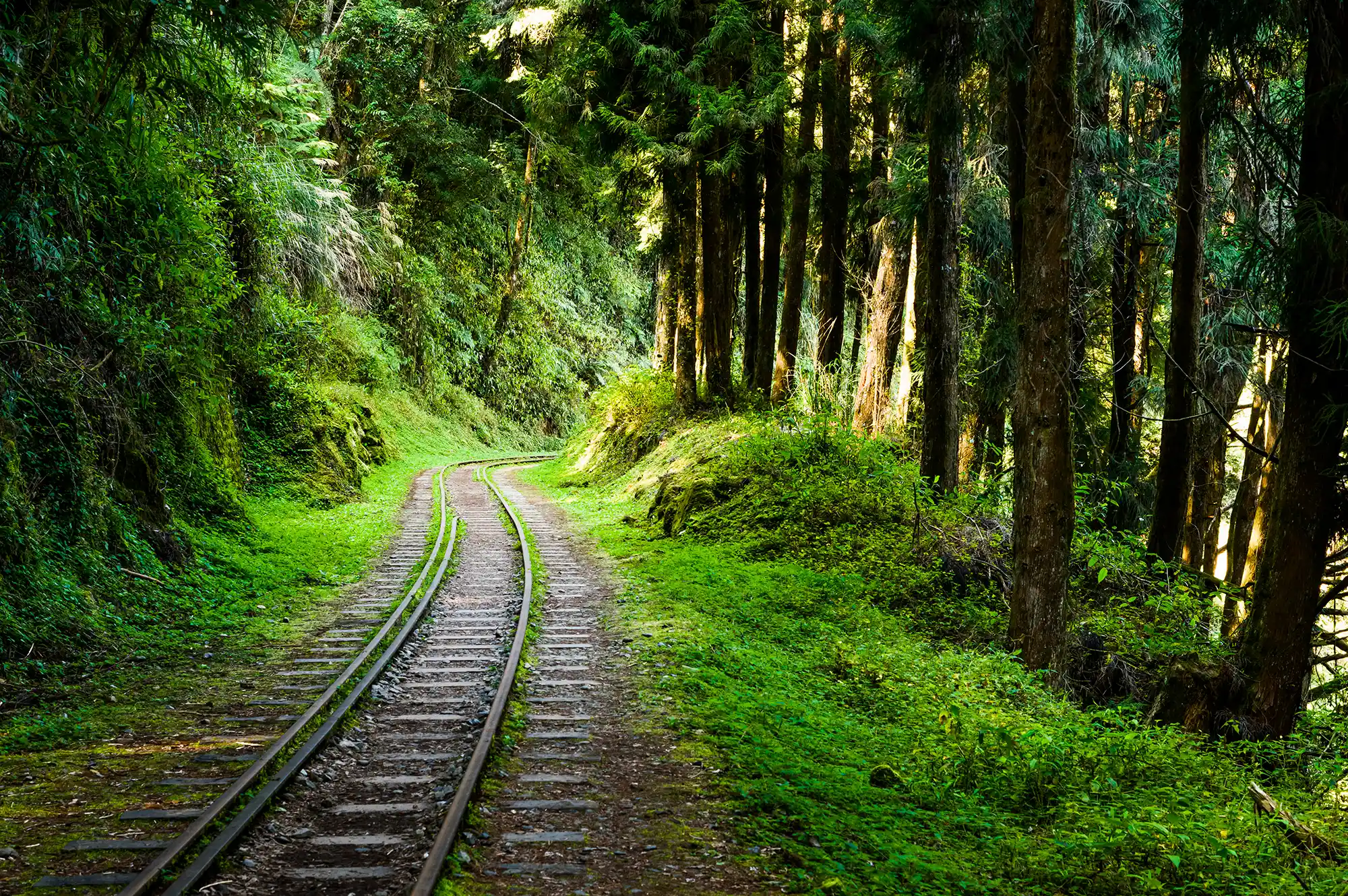
The Alishan Forest Railway climate zones and forest scenery guide tells a story of biological transition. Very few places on Earth allow you to witness such a rapid shift in flora and temperature in just a few hours.
As you pull out of Chiayi, the air is thick and tropical. You pass through fruit orchards and towering palms. However, as the elevation moves past 800 meters, the tropical humidity gives way to the subtropical zone, dominated by broad-leaved forests and the high-altitude Oolong tea plantations that produce Taiwan’s most famous export.
Between 1,600 and 2,000 meters, you enter the temperate zone. This is the heart of the journey, where the famous ancient cypress groves and giant cedars appear. The temperature usually drops by about 10 to 12 degrees Celsius during this ascent. By the time you reach the upper stations like Zhushan, you are in the frigid zone, where alpine rail systems are surrounded by mountain mist atmosphere and hardy conifers.
The Fenqihu Pivot: Bento Boxes and Heritage
No journey on the main line is complete without a stop at Fenqihu. Located at 1,403 meters, this village served as the halfway refueling station for the logging industry legacy. Back in the heyday of steam, the stop was long enough for workers to eat, giving birth to the Fenqihu bento box lunch stop during Alishan train ride tradition.
Today, getting a heritage bento box is a rite of passage. These wooden or tin boxes are packed with a marinated pork chop, a braised egg, and locally grown mountain vegetables. It is the fuel of the forest, simple and deeply satisfying. After lunch, take a walk through the Fenqihu old street, a narrow alleyway filled with the scent of freshly baked aiyu jelly and cedar wood.
For many, Fenqihu is also a decision point. While the train continues upward, some travelers choose the option of taking the Alishan forest train vs bus from Chiayi for the return leg. The bus is faster and cheaper, but it lacks the soul and the clicking rhythm of the narrow-gauge rails. If you have the time, the Alishan heritage railway history from 1912 Japanese colonial era is best appreciated by staying on the tracks all the way to the end.
Branch Line Comparison: Sunrise and Sacred Trees
Once you arrive at the main Alishan station, the experience shifts to the branch lines. These smaller, more frequent trains serve specific scenic spots within the Alishan National Forest Recreational Area.
| Branch Line | Primary Highlight | Best Time to Ride | Price (Approx) |
|---|---|---|---|
| Zhushan Line | Sunrise & Cloud Sea | Pre-dawn (check daily board) | NT$150 |
| Sacred Tree Line | Giant 2,000-year-old Cypresses | Mid-morning for mist | NT$100 |
| Zhaoping Line | Cherry Blossoms & Sisters Pond | Spring (March-April) | NT$100 |
The Zhushan sunrise line is the most iconic. It requires waking up at 3:00 or 4:00 AM to catch the sunrise train. The view from the top, where the sun breaks over the Yushan mountain range and illuminates a literal sea of clouds, is the definitive Alishan experience. For photographers seeking the best Alishan train stations for mountain views and photography, the Zhaoping station offers a stunning perspective of the train curving through cherry blossom trees against a backdrop of distant peaks.
FAQ
How do I book tickets for the Alishan Forest Railway?
Tickets can be booked through the official Alishan Forest Railway online booking website. Reservations open 14 days before the departure date at 06:00 AM Taiwan Time. Because tickets usually sell out within minutes, it is highly recommended to have your passenger details ready and a credit card handy to comply with the pay-immediately policy.
Is the Alishan Forest Railway fully operational?
Yes, as of 2026, the entire main line from Chiayi to Alishan is fully operational. After years of restoration work following typhoon damage, travelers can once again enjoy the full journey through the mountains without needing to transfer to buses for the middle sections.
How long does the train journey from Chiayi to Alishan take?
The full journey on the main line from Chiayi Station to the final terminal at Alishan takes between 3.5 to 5 hours, depending on the specific engine used and the scheduled stops. The train moves at a leisurely pace to navigate the steep gradients and spirals safely.
What is the difference between the main line and branch lines in Alishan?
The main line is the long-distance route that brings you from the city of Chiayi up into the mountains (ending at Alishan or Fenqihu). The branch lines (Zhushan, Sacred Tree, and Zhaoping) are short-distance shuttle trains that operate within the Alishan National Forest Recreational Area to bring visitors to specific sunrise points and forest trails.
Are there sunrise trains available at Alishan?
Yes, the Zhushan Line is dedicated specifically to sunrise viewing. Departure times for the sunrise train change daily based on the expected sunrise time; these times are posted at the stations and hotels in Alishan the afternoon prior. It is highly recommended to purchase these tickets the day before to avoid the early morning queues.