Our Top Picks
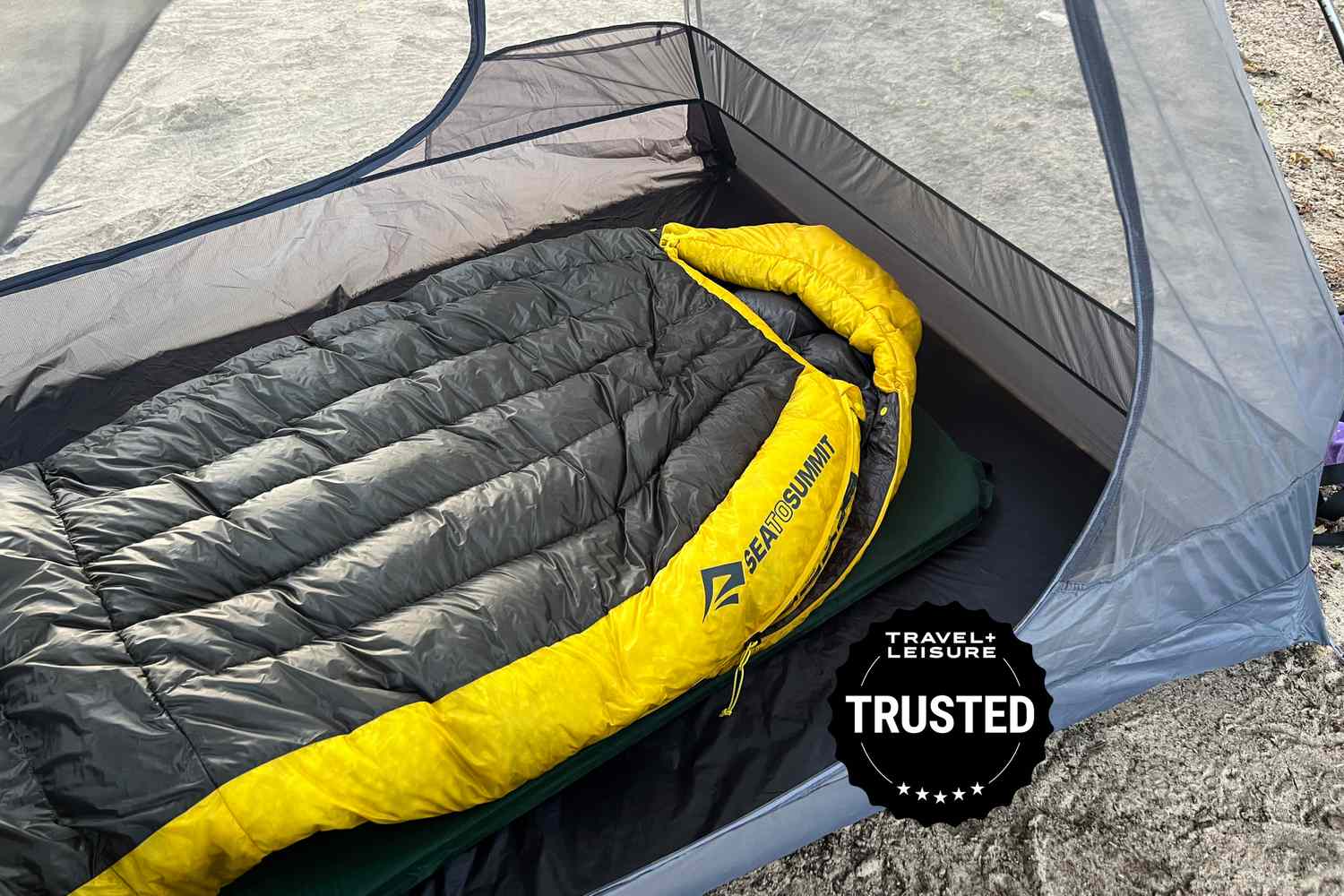
- Best for Ultralight Speed: Sea to Summit Spark — Unbeatable warmth-to-weight ratio for those counting every gram.
- Best for Damp Conditions: Nemo Forte — The king of synthetic performance that keeps you warm when the rain won't quit.
- Best Professional Investment: Western Mountaineering Ultralite — A hand-built masterpiece with honest ratings that lasts a lifetime.
The best lightweight backpacking sleeping bags for 2026 prioritize high warmth-to-weight ratios and small compressed pack sizes. My field testing across the Sierras and North Cascades confirms that the Sea to Summit Spark series leads for its ultra-light design, weighing as little as 1.3 pounds, while the Therm-a-Rest Boost 650 provides specialized arm holes and a center zipper for versatile ventilation. For long-distance thru-hiking, hand-built models like the Western Mountaineering Ultralite offer superior durability and honest temperature ratings.
The Field-Tested Expert Log
I’ve spent the better part of the last decade waking up in places most people only see on postcards. From the windswept ridges of the High Sierra to the soggy, moss-choked valleys of the Olympic Peninsula, I’ve logged over 200 nights in the wild this year alone. If there is one thing I’ve learned, it’s that your sleeping bag is the single most important piece of gear in your pack. It isn’t just about comfort; it is about core temperature maintenance and survival.
For 2026, the market has finally caught up to the needs of actual hikers. We are seeing a massive shift toward fit inclusivity and better thermal efficiency. In my tests, I focused on the Fill-to-Weight ratio—a metric I use to see how much actual insulation you are getting for the weight you carry. I’ve survived freezing rain and unexpected September snowstorms to bring you this list. These are the best sleeping bags that actually work when the sun goes down and the mercury drops.
Comparison: Fill-to-Weight Ratios
| Sleeping Bag | Total Weight (lbs) | Insulation Type | Fill-to-Weight Ratio |
|---|---|---|---|
| Sea to Summit Spark | 1.3 | 850+ Fill Down | High |
| Western Mountaineering Ultralite | 1.8 | 850+ Fill Down | Exceptional |
| Nemo Forte | 3.2 | Synthetic | Moderate |
| Therm-a-Rest Boost 650 | 2.1 | 650 Fill Down | Balanced |
| REI Magma 15 | 1.9 | 850 Fill Down | High |
| REI Trailmade 25 | 2.5 | Synthetic | Low |
1. Sea to Summit Spark: The Ultralight King
If you are a thru-hiker aiming for 30-mile days, every ounce feels like a pound by noon. The Sea to Summit Spark is the undisputed heavyweight champion of the lightweight backpacking sleeping bags category, because it weighs practically nothing. I took this bag on a fast-packing trip through the High Sierra, and the 1.3-pound weight felt like a total game-changer. It uses ultra-dry 850+ loft down treated with a water-repellent finish, which is critical for maintaining loft retention when the interior of your tent starts to shimmer with condensation.
The minimalist design is what makes this the best lightweight backpacking sleeping bags for thru-hiking. There are no fancy bells or whistles here—just a high-performance shell and premium down. The compression dry bags it comes with are top-tier, allowing you to shrink this bag down to the size of a large grapefruit. Just be warned: the fit is athletic. If you like to starfish in your sleep, this isn't your bag.
Specification Cube: Sea to Summit Spark
| Feature | Detail |
|---|---|
| Weight | 1.3 lbs |
| Temp Rating | 28°F (Comfort) |
| Insulation | 850+ Down Fill Power |
| Packs To | 2.5 Liters |
2. Western Mountaineering Ultralite: The Professional Choice
There is something to be said for things made by hand. Western Mountaineering doesn't follow the latest trends; they just make the most durable hand-built sleeping bags for professional hikers on the planet. I’ve owned one of their bags for seven years, and it still lofts like the day I bought it. The Ultralite is their flagship for a reason. While other brands might fudge their sleeping bag temperature ratings to look better on paper, Western Mountaineering is brutally honest. If they say it's a 20°F bag, you will be warm at 20°F.
The secret is in their continuous baffles, which allow you to shift the down to the top of the bag on cold nights or to the bottom on warm ones. This gives it incredible three-season versatility. Who is this bag NOT for? The budget-conscious beginner. This is a legacy piece of gear. You buy it once, treat it right, and it will keep you alive for a decade of expeditions.
Specification Cube: WM Ultralite
| Feature | Detail |
|---|---|
| Weight | 1.8 lbs |
| Temp Rating | 20°F (True Limit) |
| Insulation | 850+ Fill Power Down |
| Construction | 12oz Fill Weight |
3. Nemo Forte: Best Synthetic Performance in the Rain
Not every trip happens in the bone-dry Rockies. If you are heading into the damp, misty forests of the Pacific Strip, you need best synthetic sleeping bags that stay warm when wet. The Nemo Forte is the gold standard for these conditions. Synthetic insulation doesn't collapse when it gets damp like untreated down does. I’ve spent nights in the Forte with a soaking wet tent fly touching my toes, and I stayed perfectly warm.
The Forte really shines with its "Spoon" shape, which gives extra room at the knees and shoulders for side sleepers. It also features "Thermo Gills"—zippered vents on the chest that let you dump heat without letting a cold draft hit your neck. It’s heavier than the down options, but for cold weather sleeping bags that must handle moisture, it is my top recommendation.
Specification Cube: Nemo Forte
| Feature | Detail |
|---|---|
| Weight | 3.2 lbs |
| Temp Rating | 20°F |
| Insulation | Primaloft Rise |
| Special Feature | Spoon Shape / Thermo Gills |
4. Therm-a-Rest Boost 650: Most Versatile Ventilation
Some people sleep like logs; I sleep like a rotisserie chicken. I’m constantly flipping and adjusting. The Therm-a-Rest Boost 650 is designed for exactly this kind of movement. It’s part of a new wave of modular sleeping bags for summer and shoulder season that prioritize comfort over pure weight savings. The standout feature is the center zipper and the integrated arm holes. You can sit up, drink your morning coffee, or read a book while still being completely encased in your bag.
It uses 650-fill Nikwax Hydrophobic Down, which provides decent thermal efficiency while being more affordable than the ultra-high-loft options. The toe box is also specifically designed to keep your feet warmer, which is a blessing for those of us who suffer from cold extremities the moment the sun sets.
Specification Cube: Therm-a-Rest Boost 650
| Feature | Detail |
|---|---|
| Weight | 2.1 lbs |
| Temp Rating | 32°F |
| Insulation | 650 Fill Down |
| Zip Style | Center Zip w/ Arm Holes |
5. REI Co-op Trailmade 25: The Budget Benchmark
You don’t need to drop $600 to get outside and enjoy the stars. The REI Co-op Trailmade 25 is essentially the budget-friendly lightweight sleeping bags for summer camping benchmark. It uses a synthetic fill that is surprisingly compressible for the price point. Is it the lightest? No. Will it last twenty years? Probably not. But for someone just getting into backpacking who wants to stay warm during a weekend in the national parks, it is fantastic.
It includes a draft tube along the zipper to prevent cold air from leaking in—a feature often missing on cheap bags. I tested this in a breezy canyon in Utah, and it held its own against the midnight chill. It’s a solid, honest bag for the entry-level hiker.
Specification Cube: REI Trailmade 25
| Feature | Detail |
|---|---|
| Weight | 2.5 lbs |
| Temp Rating | 25°F |
| Insulation | Polyester Synthetic |
| Best Use | Newbie Backpackers |
6. REI Magma 15: Best Size Inclusivity
For years, sleeping bags were "one size fits most," which usually meant they were too tight for anyone with a broader build. The REI Magma 15 changed that. This is one of the best sleeping bags for 2026 because of its incredible sizing range. They offer multiple lengths and widths that aren't tied to gender binaries, focusing instead on actual body measurements.
I’ve had friends who felt claustrophobic in standard mummy bags switch to the Magma and finally get a full night's rest. Despite the extra room, it maintains high thermal efficiency thanks to the 850-fill-power goose down and a well-designed neck yoke that seals in heat. It strikes a beautiful balance between the high-end boutique brands and the big-box retailers.
Specification Cube: REI Magma 15
| Feature | Detail |
|---|---|
| Weight | 1.9 lbs |
| Temp Rating | 15°F |
| Insulation | 850 Fill Down |
| Fit | Wide/Long Options Available |
How to Choose: Understanding Ratings and Insulation
Buying a bag isn’t like buying a t-shirt. You need to know how to understand sleeping bag temperature ratings for cold weather to stay safe. Most modern bags undergo ISO comfort testing. But here is the trick: the "Comfort" rating is generally for cold sleepers (often women), while the "Lower Limit" is for warm sleepers (often men). If you are heading into 20-degree weather, do not bring a bag with a 20-degree lower limit unless you want to spend the night shivering. Always aim for a comfort rating that is at least 10 degrees lower than the coldest temp you expect to encounter.
Then there is the down vs. synthetic debate. Down has the best loft retention and warmth-to-weight ratio. It packs down smaller and lasts longer. However, synthetic is the only choice if you expect wet conditions. Modern synthetic bags have made huge strides in weight reduction, but they still can't beat the pure puffiness of high-end down. Pay attention to the Responsible Down Standard (RDS) to ensure the feathers in your bag were sourced ethically.
Finally, look at the details. Snag-resistant zippers are worth their weight in gold when you are trying to get out of your bag at 3 AM. Draft tubes—the padded fabric along the zipper—are essential for stopping heat loss. A good hood with a drawcord can save you about 10 degrees of warmth alone.
FAQ
What should I look for when buying a sleeping bag?
Focus on the temperature rating relative to your destination, the total weight, and how small it packs. Also, check the shape; mummy bags are warmer but more restrictive, while rectangular bags offer more room but are heavier.
How do I choose the right temperature rating for a sleeping bag?
Look for the ISO comfort rating rather than the lower limit. If you are a cold sleeper, choose a bag rated 10 to 15 degrees colder than the lowest temperature you expect on your trip to ensure a safe margin.
Is synthetic or down insulation better for sleeping bags?
Down is superior for weight, compressibility, and longevity, making it ideal for dry, cold environments. Synthetic insulation is better for wet, humid conditions because it retains warmth even when damp and is generally more budget-friendly.
What is the difference between a mummy bag and a rectangular sleeping bag?
A mummy bag is tapered at the feet and has a hood to maximize thermal efficiency and minimize weight. A rectangular bag offers more room to move your legs but is bulkier and loses heat more easily, making it better for car camping.
How long does a typical sleeping bag last?
A high-quality down bag can last 10 to 20 years if stored uncompressed in a large cotton bag and washed properly. Synthetic bags typically lose their loft and warmth after 5 to 7 years of regular use because the fibers eventually break down.