Quick Facts
- Shoulder Season Growth: Participation in shoulder season camping has increased by 21% since 2021 as more people avoid summer crowds.
- Essential R-Value: Target a sleeping pad with an R-value of 4 or higher to properly block the lingering winter ground chill.
- Waterproofing Standard: Look for 2026 gear featuring Hyperbead fabrics, which provide 25% better moisture shedding than previous models.
- Sleep Safety: Use a three-season sleeping bag rated down to 20 degrees Fahrenheit to handle unpredictable midnight temperature drops.
- Pro Tick Protocol: Wear bright hiking socks and tuck your pants into them to spot and stop ticks before they reach your skin.
- Kitchen Efficiency: Always carry a portable gas stove because gathering dry firewood in the spring is often an impossible task.
The most important spring camping essentials include a high-clearance three-season tent with a large vestibule, a sleeping pad with an R-rating of at least 4.0, and a comprehensive moisture-management system comprising dry bags and synthetic layers. Using these specific items ensures that even during a heavy mid-April downpour, your core temperature remains stable and your sleep system stays bone-dry.
Spring camping is a game of variables, from sudden thaws to mid-day downpours. To level up your campsite, you need specific spring camping essentials that handle the 2026 outdoor surge. This guide highlights the gear for camping in early spring that experts rely on to stay dry and warm. Since participation in spring and fall camping has increased by 21% over the last few years, the best sites are filling up early, and the weather is getting more erratic. I’ve spent countless nights high in the Cascades during the "mud season," and if there is one thing I have learned, it is that your gear must be as adaptable as the weather.
Level 1: Defeating the Damp (Shelter & Barrier Systems)
When you are looking for early spring camping packing list essentials, your shelter is the first and most critical line of defense. In my experience, a generic summer tent simply won't cut it when the wind picks up and the rain turns sideways. You need a dedicated three-season tent engineered for high-altitude condensation management. These tents are built with more robust pole structures and rain flies that extend all the way to the ground, preventing splash-back from muddy soil.
The secret to staying dry isn't just the tent itself, but how you manage the space around it. I always recommend using a dedicated rain fly or an auxiliary tarp as an extra barrier. This creates a "dry zone" over your entrance so you can peel off wet layers before stepping into your sleeping area. Additionally, pay close attention to your groundsheet. A common mistake I see is using a footprint that is larger than the tent floor. This actually catches rain and funnels it directly under you. Always ensure your groundsheet is tucked two inches inward from the tent's perimeter.
For 2026, we are seeing a significant shift in material science. Many new shelters utilize Hyperbead fabrics, which are specifically designed to keep rainy weather camping gear lightweight while offering superior water beads. Since ultralight tents weighing under 2 kilograms now account for 29% of all tent sales, you don’t have to sacrifice your back to get a waterproof sanctuary.
Pro-Tip: Condensation is your biggest enemy in the spring. Even if it is raining, keep your tent vents open. This allows airflow to circulate and prevents your breath from turning into "interior rain" that soaks your sleeping bag by morning.
Don't forget the organization. Using dry bags to isolate wet gear from clean items is a pro move that keeps your sanity intact. I use color-coded dry bags: red for my emergency kit, blue for my dry sleep clothes, and green for my tech. This makes navigating your pack in a dark, cramped tent much easier. Finding the right spring camping gear for rainy weather means thinking about the "wet-dry divide" every time you enter or exit your shelter.
Level 2: Mastering Thermal Regulation (Sleep & Layers)
Spring temperatures are a rollercoaster. One hour you’re hiking in a t-shirt, and the next you’re shivering as the sun dips behind a ridge. Mastering the best clothing layers for spring camping requires a strict "no-cotton" policy. Cotton is a sponge for moisture, and once it gets wet from sweat or rain, it stops insulating and starts leaching heat from your body.
Instead, start with a moisture-wicking synthetic or thermal base layer. This manages sweat during active hikes. Add an insulating mid-layer—like a high-loft fleece or a synthetic "puffy" jacket—and top it off with a waterproof, windproof outer shell. Synthetic insulation is generally better than down for spring because it continues to trap heat even if it gets damp.
When it comes to essential gear for sleeping comfortably in spring, the ground is often colder than the air. You can have the best sleeping bag in the world, but if your pad is thin, the ground will pull the heat right out of you. With outdoor recreation participation reaching a record 181.1 million recently, more people are realizing that sleep quality determines trip success.
| Feature | Spring Sleep System | Summer Sleep System |
|---|---|---|
| Sleeping Bag Rating | 15°F to 25°F | 35°F to 50°F |
| Insulation Type | Synthetic (Moisture Resistant) | Down (Lightweight) |
| Pad R-Value | 4.0 or higher | 1.0 to 2.5 |
| Key Accessory | Hot water bottle / Draft collar | Integrated mosquito net |
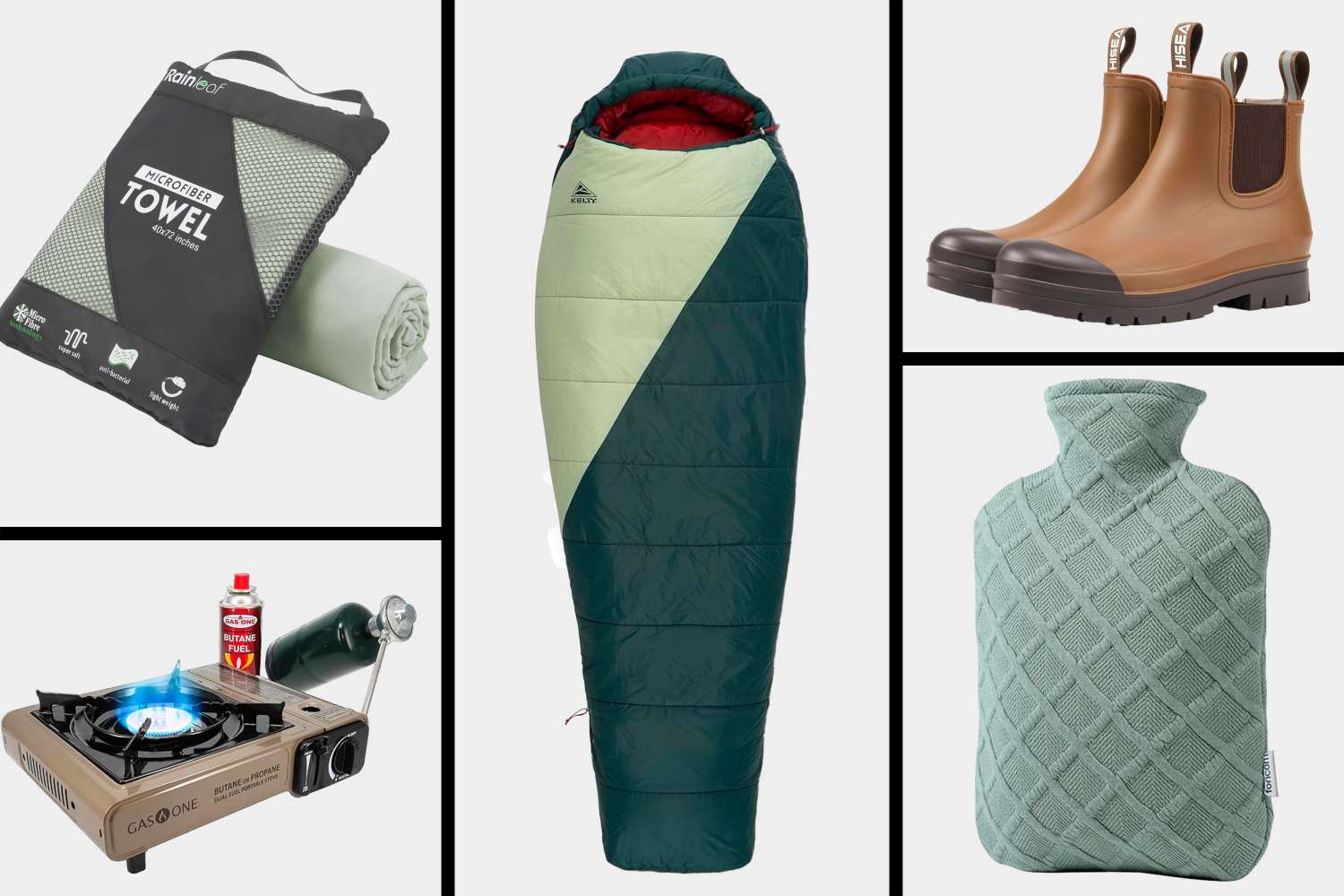
Your spring camping packing list must include a three-season sleeping bag with a draft collar. This is an insulated tube around the neck that prevents warm air from escaping every time you move. If you find yourself still feeling the chill, use a rubber hot water bottle. Fill it with boiling water from your stove, wrap it in a clean sock, and toss it at the foot of your bag. It’s a manual heat source that lasts for six to eight hours.
Level 3: The Mud & Bug Protocol (Sanitation & Safety)
You cannot talk about gear for camping in early spring without addressing the mud. Most trails in April and May are transitional, meaning they are a mix of slush, standing water, and deep muck. Finding the right waterproof footwear for spring camping trips is the difference between a great weekend and a blister-filled nightmare. Look for boots with deep lugged soles for traction and a Gore-Tex or similar waterproof membrane.
Safety in the spring also means dealing with the awakening insect population. This is the prime season for active spring ticks. My personal protocol involves wearing bright, long hiking socks. The light color makes it easy to spot a dark tick crawling up your leg, and tucking your pants into them ensures they stay on the outside of your clothes.
I also never head out without several high-absorbency microfiber towels. These are perfect for wiping down the tent floor, drying off a damp dog, or cleaning mud off your legs before you crawl into your sleeping bag. They occupy almost no space in your pack but offer massive utility when the weather turns south.
Pro-Tip: Treat your outer layers with a Permethrin spray before you leave home. It creates a long-lasting chemical barrier against ticks and mosquitoes that survives multiple washes, giving you an invisible layer of defense.
Level 4: Kitchen Tech & Post-Trip Recovery
The final piece of the puzzle is your camp kitchen. In the summer, a small campfire is great for cooking, but in the spring, damp logs make campfires difficult and frustrating. This is why portable stoves and cooking essentials for spring camping are non-negotiable. I prefer a canister stove with a built-in pressure regulator, which performs consistently even when the outside temperature is hovering near freezing.
A portable gas stove serves as a critical backup for boiling water quickly—not just for food, but for that essential hot water bottle heat source I mentioned earlier. During my solo expeditions, I’ve found that a hot meal in the rain is the single best way to boost morale.
Lastly, consider your "vehicle recovery kit." This is gear you leave in the car for when you return from the trail. It should include a full change of dry clothes, a heavy towel, and perhaps a thermos of coffee. There is no feeling quite as satisfying as peeling off muddy boots and wet socks to step into a warm, dry car after a successful trip. Also, remember to inspect your gear gaskets and stove seals after they have been in winter storage; the transition to spring is the best time for a full gear audit.
Summary Checklist for Spring 2026
- Tent: 3-season with full-coverage rain fly and Hyperbead fabric.
- Sleeping Pad: Insulated with an R-value of 4 or higher.
- Sleeping Bag: Rated for 20°F with a draft collar.
- Layers: Moisture-wicking synthetic base, fleece mid-layer, waterproof shell.
- Footwear: Waterproof boots with high-traction soles.
- Bug Protection: Bright socks and Permethrin-treated clothing.
- Kitchen: Reliable canister stove with extra fuel.
- Organization: Color-coded dry bags for all electronics and clothing.
FAQ
What are the most important things to bring for spring camping?
The most critical items are a high-quality three-season tent, moisture-wicking synthetic layers, and an insulated sleeping pad with an R-value of at least 4. Proper shelter and thermal regulation are your priorities because spring weather is notoriously unpredictable and dampness can lead to hypothermia even in moderate temperatures.
How do you stay warm camping in the spring?
Staying warm is about managing moisture and insulation. Avoid cotton at all costs; use synthetic or wool layers that retain heat when wet. Use a sleeping bag rated for colder temperatures than you expect, and always use a sleeping pad to block the cold ground. Adding a hot water bottle to the bottom of your sleeping bag is a highly effective way to maintain warmth through the night.
How do you prepare for rain and mud while camping?
Preparation starts with a good site selection on elevated, well-draining ground. Use a dedicated groundsheet that is slightly smaller than your tent floor to prevent water from pooling. Ensure you have waterproof footwear for spring camping trips and bring several microfiber towels to manage condensation inside the tent and clean mud off gear.
What kind of sleeping bag is best for spring temperatures?
A three-season sleeping bag rated between 15°F and 25°F is ideal. Look for bags with synthetic insulation, as they handle the high humidity and condensation of spring better than traditional down. A bag with a draft collar and a well-fitted hood will help trap the heat your body generates during the night.
How do I keep my gear dry during a spring camping trip?
The best way to keep gear dry is to use a multi-tiered defense system. Pack your clothing and electronics in individual dry bags inside your backpack. Use a rain cover for your pack while hiking, and set up a secondary tarp over your tent's entrance to create a dry vestibule space for removing wet outer layers before entering your sleeping area.